Sustainability サステナビリティ

Affordable and Clean Energy

Affordable and Clean Energy

All Tokyu lines will run on 100% renewable energy.

Particularly relevant targets:

  • 7.2 Significantly increase the proportion of renewable energy
  • 7.3 Double the rate of energy efficiency improvement

Other related goals:

Related material sustainability themes:

  • Safety and Security
  • Urban and Community Development
  • Decarbonized and recycling-based society

Tokyu Lines: Virtually zero CO2 emissions

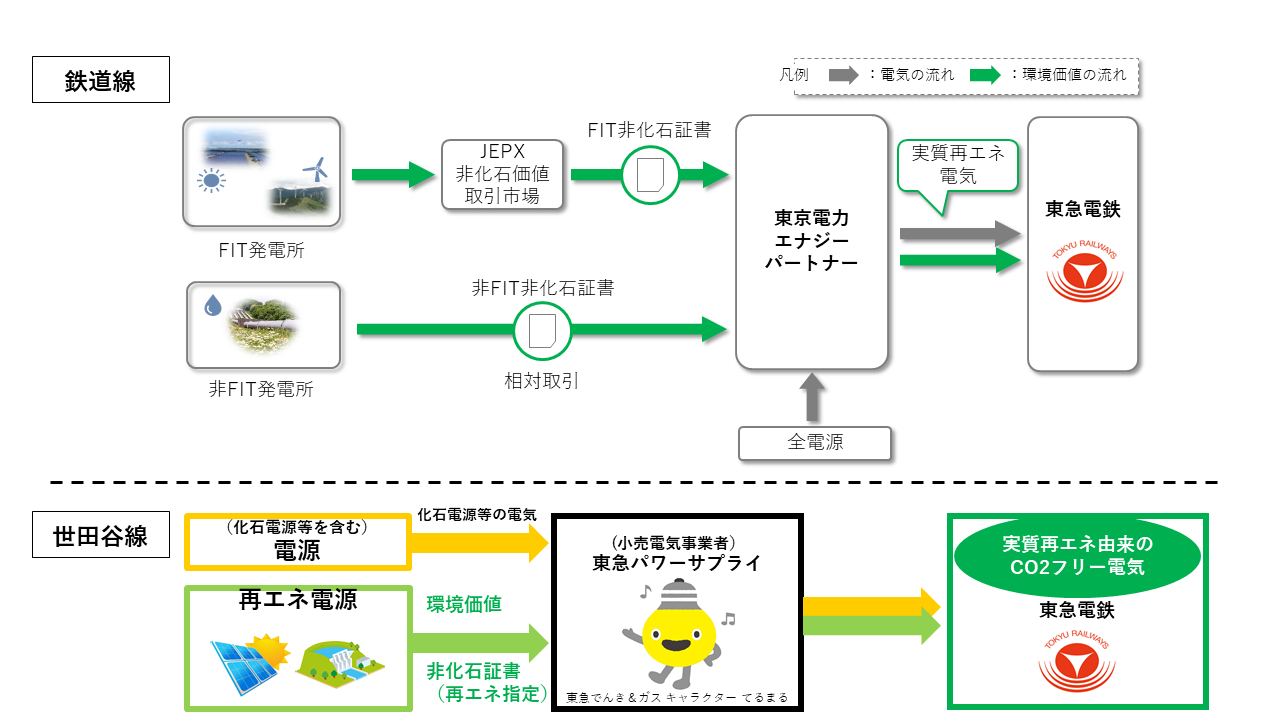
Starting in April 2022, electricity for operation on all Tokyu lines will be replaced with electricity derived from renewable energy sources that has zero net CO2 emissions. This is the first initiative in Japan to operate all lines with 100% electricity derived from renewable energy sources. This initiative will result in net zero CO2 emissions, and is expected to reduce annual CO2 emissions by approximately 165,000 t-CO2, equivalent to the annual CO2 emissions of approximately 56,000 average households*. This initiative is an important measure toward realizing Environmental Vision 2030 goal of "a daily life in which environmentally friendly actions can be chosen without any special burden," and will contribute to the decarbonization of the city and significantly advance various initiatives toward achieving the vision's goal of net zero CO2 emissions in our group's businesses by 2050.

*Calculated from the Ministry of the Environment's "2020 Residential CO2 Status Survey (Preliminary Values)"
Introduction of new environmentally friendly vehicles and energy conservation initiatives

In addition to this initiative, we are further promoting energy-saving measures such as updating our rolling stock, converting station lighting to LED, and improving the efficiency of our facility and equipment in order to make effective use of renewable energy.

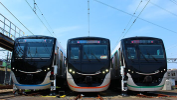
railway Line has introduced the 5000, 6000, and 7000 series of trains, which are based on the concept of "People- and Environment-friendly Carriages." In addition, in 2018, the new 2020 series was introduced on Den-en-toshi Line, the 6020 series on the Oimachi Line, and in 2019, the 3020 series on the Meguro Line. The trains use low-noise traction motors and drive units, reducing noise levels along the line and outside the train by about 10 dB compared to the old trains (8500 series). In addition, the high-efficiency drive of the traction motors by control devices using next-generation semiconductor elements and the use of LED lights for all interior lighting and headlights and taillights have reduced electricity consumption by about 50% compared to the old trains (8500 series). Den-en-toshi Line Line has introduced the new 2020 series, and completed the replacement of the old trains (8500 series) in January 2023.

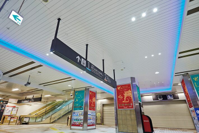
Additionally, we are reducing power consumption by switching to LED lighting in railway facilities, including stations. Of this, we are systematically updating the lighting in stations and other facilities, and as of the end of March 2023, the introduction of LED lighting has been completed in 78 of 99 stations, with the aim of converting all stations to LED lighting as soon as possible.

Construction of an apartment building that runs on 100% renewable energy

Particularly relevant targets:

  • 7.2 Significantly increase the proportion of renewable energy
  •  
  • 7.3 Double the rate of energy efficiency improvement

Other related goals:

Related material sustainability themes:

  • Safety and Security
  • Urban and Community Development
  • Decarbonized and recycling-based society

In our Environmental Vision 2030, based on the concept that "Connecting everyday life to a sustainable tomorrow" we aim to realize "an everyday life in which environmentally friendly choices can be made without any sense of burden," and are providing services that promote decarbonization for our customers and encourage environmentally friendly behavior.

Dresse Tower Musashi-kosugi

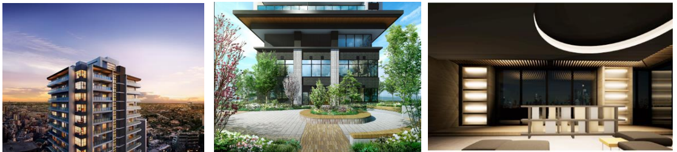
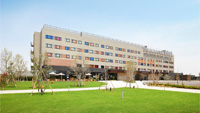
Our company's "Dresser" series of condominiums is committed to contributing to a decarbonized society and providing Safety & Security housing that meets the lifestyles of each individual. The "Dresser Tower Musashikosugi," a condominium tower with a seismic isolation structure provided by our company and Itochu property development Co., Ltd., will use 100% renewable energy with environmental value that has been certified as non-fossil fuel, and will contribute to carbon neutrality. This is the first time in Japan that a condominium tower will use 100% renewable energy. In addition, some of the electricity used in the common areas will be generated by solar power, and the common areas will be equipped with storage batteries that can be used in emergencies. In addition, the building will be compatible with electric vehicles (EVs), and multiple mechanical parking pallets compatible with EVs will be installed. In addition, the building will have a long lifespan due to the use of high-strength concrete, and we are also working on low-carbon measures. "Dresser Tower Musashikosugi" is scheduled to be completed in May 2024.

Dresse Tower Minami-Machida Grandberry Park

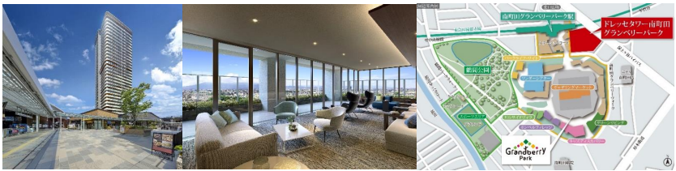
The Dresse Tower Minami-Machida Grandberry Park, a condominium tower with a seismic isolation structure directly connected to Minami-Machida Grandberry Park Park Station on Den-en-toshi Line and adjacent to Grandberry park shopping complex, will also supply 100% renewable energy using non-fossil fuel certificates to all units and common areas. In addition, 25kW quick chargers will be installed to promote the spread of electric vehicles (EVs) and a carbon-neutral lifestyle that utilizes 100% renewable electricity.

Minami-Machida Grandberry Park is an area of approximately 22 hectares centered on Tsuruma Park, which spreads out to the south of Minami-Machida Grandberry Park Station on Den-en-toshi Line, and the former site of Granberry Mall, which closed in February 2017. In this area, a public-private partnership Urban and community development to create a "new lifestyle hub" where people can enjoy park life that combines nature and bustle by comprehensively redeveloping and rebuilding urban infrastructure, commercial facilities, urban parks, and stations. This property is directly connected to Minami-Machida Grandberry Park Grandberry park Station and the commercial facility Grandberry park via a second-floor pedestrian deck.

Dresse Tower Minami-Machida Grandberry Park is scheduled to be completed in March 2024.

Local production and consumption of renewable energy in collaboration with Setagaya Ward

Particularly relevant targets:

  • 7.2 Significantly increase the proportion of renewable energy

Other related goals:

Related material sustainability themes:

  • Quality of Living Environment
  • Decarbonized and recycling-based society

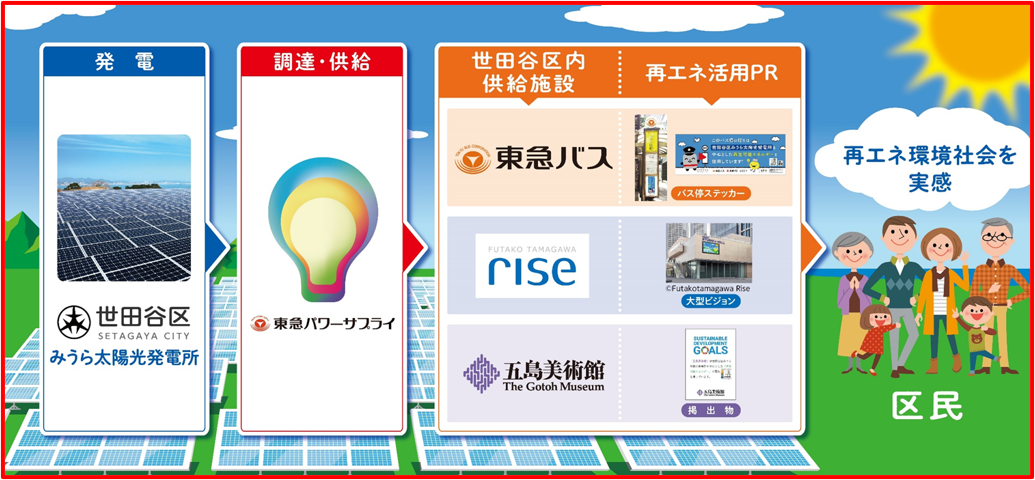
Tokyu power supply, with its office in Yoga, Setagaya Ward, is working to promote local production and consumption of renewable energy in cooperation with the local ward as well as with Tokyu Group facilities and companies that operate within the ward.

Specifically, renewable energy electricity generated at the Setagaya Miura Solar Power Plant, owned by the ward, is supplied to Tokyu Bus stops (50 locations within Setagaya), which are part of the local transportation infrastructure, as well as Futako Tamagawa Rise (Futako Tamagawa), one of Tokyo's leading complexes, and Goto Museum of Art (Kaminoge), a hub for culture and the arts.

This will not only reduce CO2 emissions by approximately 245 tons per year, but it will also be a public-private partnership that will enable everyone to experience the arrival of an environmentally friendly society and the use of renewable energy in their daily lives, moving towards a decarbonized society.

In addition, Tokyu power supply, Tokyu Bus, and Goto Museum of Art of Art are also participating in the "Setagaya Version RE100," an initiative established by Setagaya Ward with the aim of expanding the use of renewable energy through collaboration between residents, businesses, and the ward.

Tokyu Bus 's hydrogen fuel cell buses emit no exhaust fumes

Particularly relevant targets:

  • 7.2 Significantly increase the proportion of renewable energy
  • 7.3 Double the rate of energy efficiency improvement

Other related goals:

Related material sustainability themes:

  • Safety and Security
  • Urban and Community Development
  • Decarbonized and recycling-based society

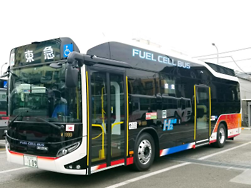
Introduction of hydrogen fuel cell bus "SORA"

Tokyu Bus and Tokyu Transse recognize the importance of protecting the global environment, and are committed to promoting energy-saving, resource-saving, and low-pollution measures through business activities, thereby reducing the burden on the natural environment.

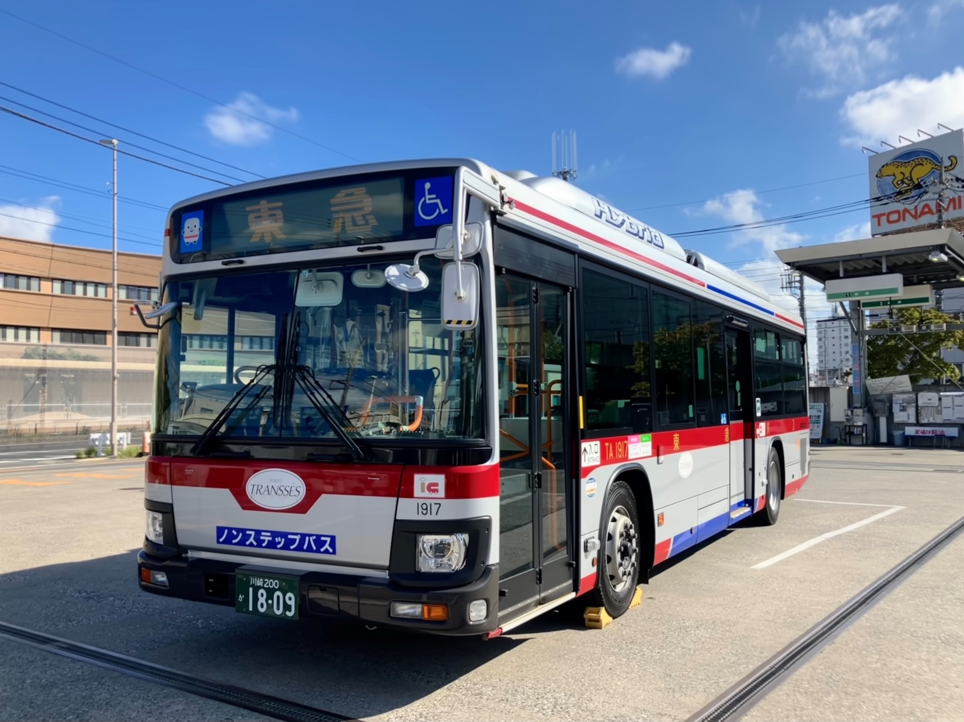
Among these, exhaust gases that directly emit greenhouse gases and substances of concern are a major issue. Up until now, we have introduced environmentally friendly bus vehicles such as hybrid buses that use multiple power sources (diesel-powered engines and electric motors) to drive the vehicle, but from April 2020, we have introduced the fuel cell bus "SORA" (manufactured by Toyota Motor Corporation), which generates electricity through a chemical reaction between hydrogen and oxygen in the air and runs on a motor. Fuel cell buses not only do not emit CO2 or substances of concern when running, but they are also quieter and more comfortable to ride than regular diesel buses.

The hydrogen fuel cell bus "SORA" runs on the East 98 route (Tokyo Station South Exit to Todoroki Marshalling Yard) and Shibuya 41 route (Shibuya Station to Oimachi Station, etc.).

Fuel cell bus "SORA"
Hybrid Bus

Initiatives to reduce environmentally hazardous substances in exhaust gases

Even for buses that run on diesel other than hydrogen fuel cell buses, we are working to reduce emissions of environmentally hazardous substances and prevent air pollution.

The "Exhaust After-treatment Device (Urea SCR)" is a system that injects harmless AdBlue (urea water) into the muffler from an additive nozzle, and uses ammonia generated by hydrolysis due to the heat of the exhaust as a reducing agent to decompose and neutralize nitrogen oxides (NOx) in the SCR catalyst. NOx is significantly reduced without compromising fuel efficiency.

In addition, more than half of all vehicles are equipped with diesel engines that combine "ultra-high pressure fuel injection," which increases fuel injection pressure, atomizes fuel to promote mixing with the air, and suppresses the generation of particulate matter (PM) by completely burning it, with this "exhaust aftertreatment device (urea SCR)." In addition, the diesel used has reduced sulfur content, which creates sulfur oxides (SOx), which are known to be a cause of acid rain, just like nitrogen oxides (NOx).

Hydrogen x Biogas Power Generation Kawasaki King Skyfront Tokyu Rei Hotel

Particularly relevant targets:

  • 7.2 Significantly increase the proportion of renewable energy

Other related goals:

Related material sustainability themes:

  • Urban and Community Development
  • Decarbonized and recycling-based society

The world's first hydrogen hotel

Kawasaki Tonomachi King Skyfront is located across the Tama River from Haneda Airport. The King Skyfront area is an international strategic hub where companies and research institutes in the fields of life science and the environment are concentrated. Kawasaki King Skyfront Tokyu Rei Hotel, which opened here in June 2018, is the world's first hydrogen hotel that uses hydrogen derived from used plastics to generate electricity and hot water. Hydrogen is produced from waste materials such as household plastic waste and hotel amenities at Showa Denko's hydrogen production facility and transported to the hotel's fuel cell through a pipeline. This fuel cell generates electricity through a chemical reaction between hydrogen and oxygen, which is used for lighting and power in the hotel. In addition, the waste heat from the fuel cell is also used for hot water. Through this initiative, the hotel generates approximately 530,000 kWh of electricity per year, equivalent to the electricity consumed by 110 four-person families, covering approximately 30% of the hotel's electricity consumption, and reducing CO₂ equivalent to 580 t-CO₂ per year. The demonstration experiment has now been completed and the hydrogen fuel cell is being updated.

But that's not all - lettuce is grown hydroponically in the lobby using electricity derived from hydrogen energy, and the harvested lettuce is served at the buffet. The lettuce is grown using a "high-speed cultivation method" that alternates between red and blue LEDs, resulting in larger leaves and faster growth compared to conventional cultivation methods, allowing for more efficient growth.

Biomass power generation through 100% recycling of food waste

In addition to the above, since August 2019, the hotel has been providing approximately 6,500 kg of food waste per year to the power generation facility of J Bio Food Recycle Co., Ltd., which uses microorganisms to ferment it into methane, and has participated in an initiative to use the generated biogas as fuel to generate electricity, thereby achieving a 100% recycling rate. A circular system has also been established in which the electricity generated is bought back by Urban Energy Co., Ltd., a power seller, and used at the hotel. For other electricity, the hotel has introduced the 100% renewable energy plan "Zero Emission Plan®" *, realizing a CO2-free electricity hotel, with 30% of the total electricity provided by hydrogen energy and 70% by renewable energy.

*An environmentally conscious electricity supply plan that uses FIT electricity as its power source and non-fossil fuel certificates and J-Credits to achieve 100% net renewable energy.
Zero Emission Plan® is a registered trademark of Urban Energy Co., Ltd.

Towards a hotel that is "eco-friendly just by staying"

These efforts are being carried out in collaboration with the public and private sectors along with other leading projects based on the Ministry of the Environment's Regional Collaboration and Low-Carbon Hydrogen Technology Demonstration Project and the Kawasaki Hydrogen Strategy promoted by Kawasaki City. These demonstration projects will end in March 2022, and going forward, the hotel will further evolve its own initiatives toward the realization of a decarbonized, recycling-based society. As the world's first hydrogen-powered hotel, the hotel will propose SDGs school trips combined with tours of factories and lettuce cultivation facilities, rent out electric kick scooters that use renewable energy, and aim to be an "eco-friendly hotel just for staying," further enhancing the value of the accommodation experience.