Particularly relevant targets:
- 13.1 Strengthening resilience and adaptive capacity to climate-related hazards and natural disasters
Related material sustainability themes:
- Safety and Security
- Urban and Community Development
- Decarbonized and recycling-based society
In order to realize sustainable Urban and community development, our group is working to strengthen resilience against natural disasters. In September 2020, we endorsed the recommendations of the Task Force on Climate-related Financial Disclosures (TCFD) and are identifying risks and opportunities based on scenario analysis, calculating the degree of impact, and implementing this into our business strategy. We are disclosing the four items of "governance," "strategy," "risk management," and "metrics and targets" on our website as well as in our integrated report and securities report.
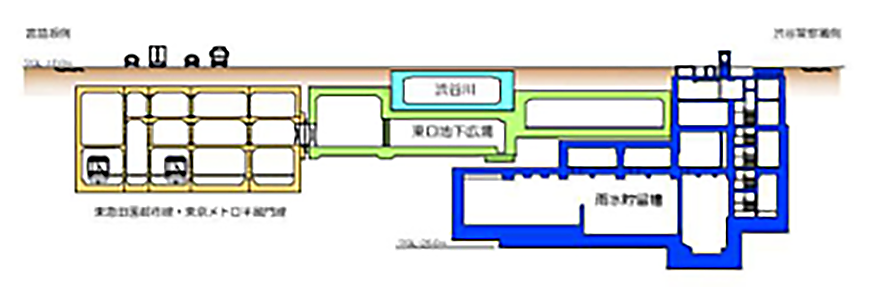
Installation of rainwater storage facility at the east exit of Shibuya Station
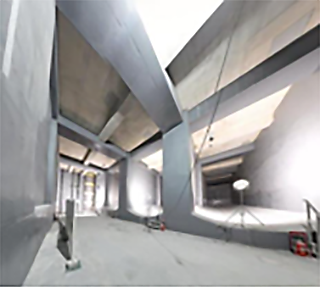
The area around Shibuya Station has a bowl-shaped topography, making it vulnerable to flooding and inundation. In preparation for the recent increase in torrential rains, our company and the Urban Renaissance Agency, as joint developers of the Shibuya Station Block Land Readjustment Project, have been working on the construction of a rainwater storage facility at the east exit of Shibuya Station, aiming to "realize a safe and secure urban development that is resistant to flooding." Construction began in February 2011, and construction was completed and put into service in August 2020 (managed by the Tokyo Metropolitan Government's Sewerage Bureau). The facility is a large-scale structure measuring approximately 45m north to south and 22m east to west, located approximately 25m underground in the underground plaza at the east exit of Shibuya Station, and can temporarily store approximately 4,000m3 of rainwater. When heavy rainfall exceeds 50mm per hour, the water is taken in, and when the weather improves, it is pumped out to the existing sewer main line to prevent flooding damage.
Additionally, Futako Tamagawa Rise, which is located close to the Tama River, has also installed a similarly large underground rainwater storage facility, strengthening the city's resilience against flooding and other disasters and contributing to the creation of a safe, secure and sustainable urban development.
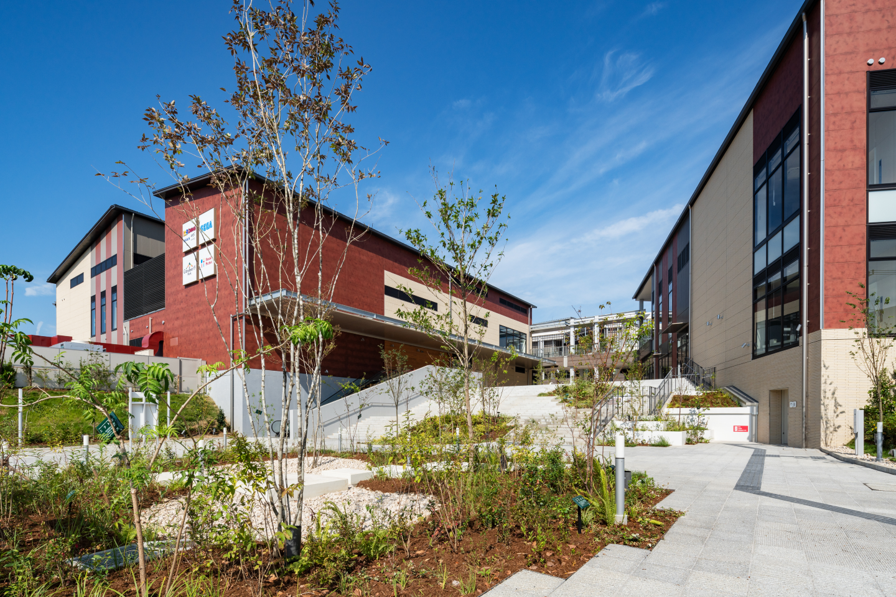
Green infrastructure at Minami-Machida Grandberry Park
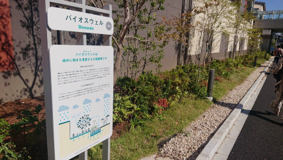
Minami-Machida Grandberry Park, which opened in 2019 as a result of cooperation between our company, Tokyu Railways and Machida City, was developed as an integrated development of a station, commercial facilities, and urban park. Based on the concept of "the entire town becoming a park," Minami-Machida Granberry Park is a seamless town with a continuous series of open spaces that combine activity and greenery. By adopting permeable pavement, bioswells, rain gardens, etc. throughout the area, a system has been established to return some of the rainwater to the ground, and rainwater management is carried out using "green infrastructure" that utilizes the functions of the natural environment to develop social infrastructure.
These efforts have been recognized, and the building has received Gold certification from the international environmental certification system "LEED ND (Neighborhood Development Section)." This is the first time in Japan that a building that includes a station has received Gold certification.
In addition, by planting flowers and fruit-bearing trees on the exterior of the commercial facility "Drandberry park," we aim to encourage birds and insects to live there, and to blend nature with lively activity.