Building a biological network in a complex
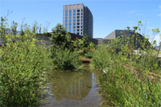
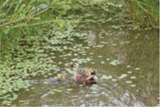
Futako Tamagawa Rise, a complex consisting of commercial facilities, offices, hotels, and residential blocks, is contributing to the creation of a biological network connecting the Tama River and the Kokubunji Cliff Line by regenerating the surrounding vegetation from the Tama River, Kokubunji Cliff Line, Todoroki Valley, and other areas within the facility. The vast roof garden (rooftop greenery) of approximately 6,000 ㎡ is based on the concept of an "ecomuseum," and is a space where visitors can experience and learn about the local nature. The Kilfish Pond, a biotope that recreates the surrounding waterside environment, is stocked with Minami-medaka, loaches, Motsugo, and Ishigame, and in some seasons, parents and children of spot-billed ducks can also be seen.
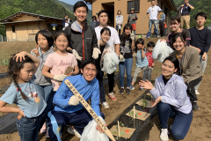
At the "Harappa Hiroba" (Field Square), where visitors can enjoy the water and greenery of the Tama River, the endangered Aster kantoensis, which lives in the Tama River, is cultivated for conservation purposes. During the flowering season, the park also serves as a place for local environmental education.
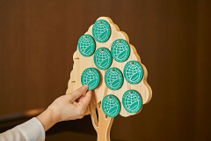
These efforts to maintain and conserve the Tama River ecosystem have been recognized, with the project receiving the highest rank of AAA from the Japan Japan Habitat Evaluation and Certification Program (JHEP), a domestic third-party program that evaluates projects that enhance Biodiversity.