Particularly relevant targets:
- 17.17 Effective public, public-private and civil society partnerships
Related material sustainability themes:
- Urban and Community Development
Since our founding, we have engaged in "Urban and community development" while building relationships of trust through repeated dialogue with customers, employees, local community, business partners, shareholders and investors. Our company's growth is linked to the growth of the town, and in order to ensure lasting improvements for both parties, trust with all concerned parties is essential, and our greatest strength is the strong trust we have built with our partners in community-based urban and community development. In particular, our public-private partnerships based on trust with national and local governments are not just about individual projects, but also about sharing the vision and direction of the town, and we work together to urban and community development.
Cooperation with Yokohama City
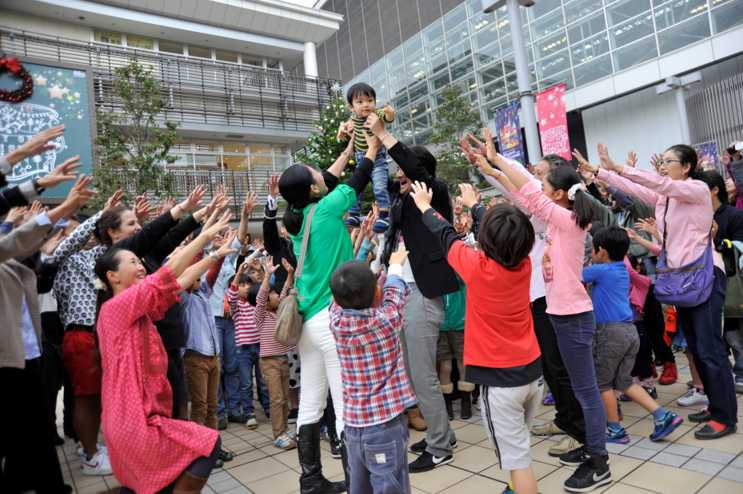
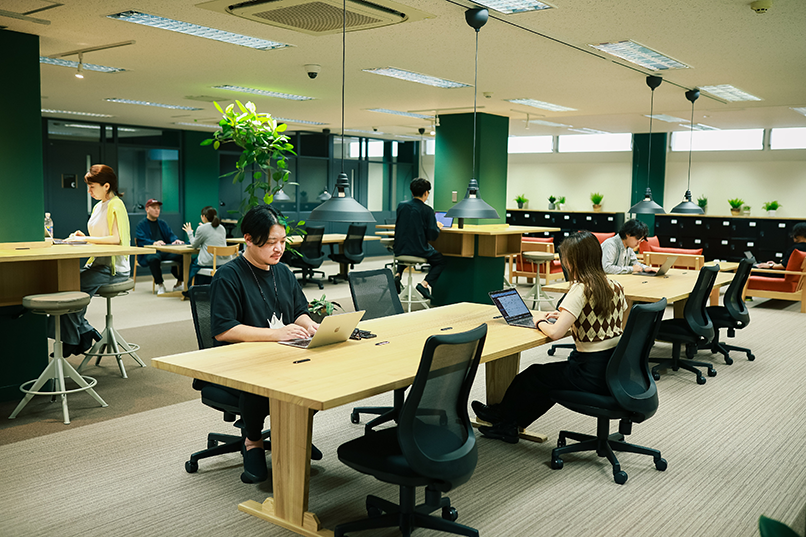
In 2012, Yokohama City and our company signed a comprehensive agreement on "Next-generation suburban development," and we have been working together to promote resident-participation type town urban and community development that solves the issues of suburban residential areas through collaboration and cooperation between industry, government, academia, and the public (local community). To date, we have implemented a variety of activities aimed at realizing "community living*," such as supporting resident-urban and community development activities, creating human resources to lead town development through the "Living and Working in Garden City" project, and establishing activity and exchange centers such as "WISE Living Lab," "CO-NIWA Tama Plaza," and "S-Plus Aobadai," with the aim of realizing sustainable suburban residential areas.
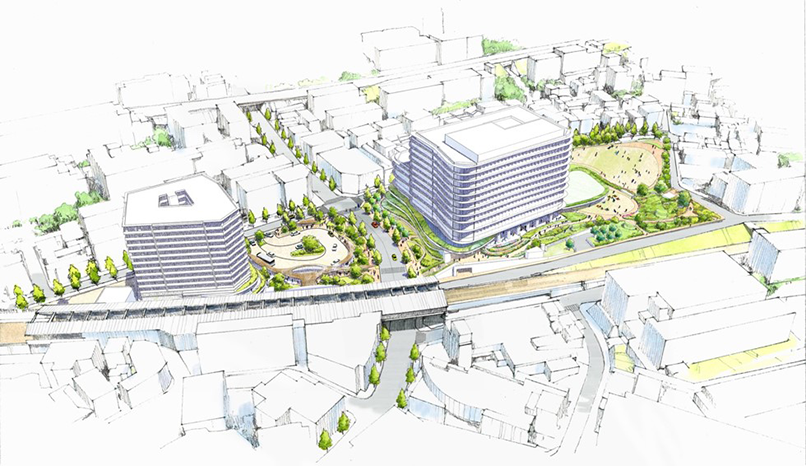
In addition, at Fujigaoka Station on the Den-en-toshi Line, we are working with Showa University Fujigaoka Hospital in front of the station to integrate the "station facilities, hospital, and park" in order to realize urban and community development surrounded by lush urban and community development, friendly to people, and where people of all generations can live healthily. In 2020, we announced the "Fujigaoka Station Area Redevelopment Master Plan (Draft)," which was formulated after listening to the opinions of local residents. Going forward, we will continue our deliberations with the goal of "implementing concrete projects."
*A town where all the necessary facilities for daily life are available within walking distance from one's home, allowing everyone to continue living in peace.
Cooperation with Kawasaki City
In the Kawasaki City Comprehensive Plan (March 2022), the area around Saginuma Station is positioned as a local lifestyle hub that will "take into account social changes, strengthen the concentration of urban functions and transportation hub functions that respond to diverse lifestyles around the station, and promote efforts to create a local lifestyle hub that will serve as a "core" to revitalize the entire Miyamae Ward."
Our group owns stations, station plazas, commercial facilities, etc. In 2015, we concluded a comprehensive partnership agreement with Kawasaki City and have been supporting the Saginuma Station Area Redevelopment Preparatory Association, the project owner, as a business partner, to promote the complex development of diverse urban functions.
Cooperation with Ota Ward
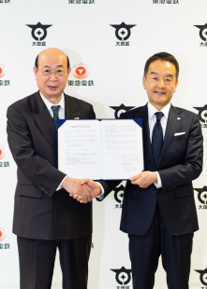
In 2019, Ota Ward and our company signed a "Basic Agreement on the Promotion of Urban Development through Public-Private Partnerships Utilizing Regional Strength sustainable development of the area centered around the station. Initiatives based on this agreement are diverse, including "discovering and promoting local resources" and "regional revitalization through renovation of idle assets such as vacant houses and vacant stores," as well as "workshops to rediscover the charm of parks" and "considering business succession for privately owned shops." As a leading project, in conjunction with our reconstruction of Ikegami Station on the Ikegami Line and development of Etomo Ikegami, we have implemented the "Ikegami Area Renovation Project" in the area centered on the approach from Ikegami Station to Ikegami Honmonji Temple. Going forward, both parties will continue to study ways to solve local issues and revitalize the area, making use of the example of our efforts in Ikegami.
Cooperation with Machida City
Minami-Machida Grandberry Park, which opened in 2019, is a "new lifestyle hub" that was created through a public-private partnership with Machida City, and includes a station, commercial facilities, and an urban park. For more information about Minami-Machida Grandberry Park, please see "Number 11: Sustainable cities and communities."