(リード文)

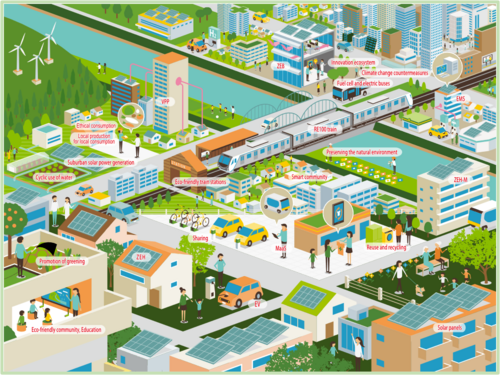
In 2022, the Company and its consolidated subsidiaries established "Environmental Vision 2030" in recognition of the need to work together with the many stakeholders who support us and change their lives, in addition to individual company and individual efforts. In the three years since the establishment of the "Environmental Vision," we have made progress at a pace that has exceeded our initial goals by implementing a variety of initiatives aimed at contributing to solving global issues while seeking a model for a city that is in harmony with the environment. In order to further accelerate our efforts under the concept of "Connecting everyday life to a sustainable tomorrow", we have now updated our goals as "Environmental Vision 2040".

Towards a decarbonized, recycling-based society

Establishment of Environmental Vision and Initiative Targets

In September 2025, in order to accelerate the efforts under Environmental Vision 2030, the Company and its consolidated subsidiaries updated their targets to Environmental Vision 2040. Aiming to create Urban and community development everyone can contribute to a sustainable society and the regeneration of the global environment, we have set targets for our efforts toward a decarbonized, recycling-based society and will continue to work proactively toward these goals.

各社・各部門を巻き込み連結全体で推進する

Recent Topics

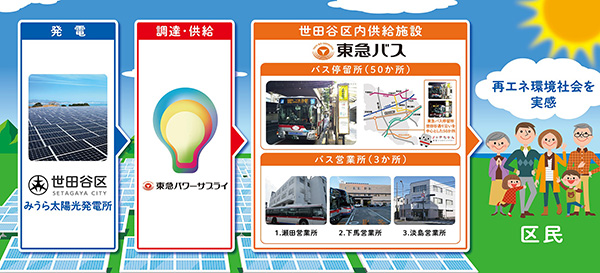
■ CO2-free bus stops and other facilities using renewable energy from solar power plants

Tokyu Bus has achieved CO2-free operation by using renewable energy supplied by the Setagaya Miura Solar Power Plant at 50 bus stops, mainly along Setagaya Street, and at two offices in Setagaya Ward. This initiative was launched in April 2025 as the second phase of the "local production and consumption of energy" initiative that Tokyu Group facilities and companies operating in Setagaya Ward have been working on.

■ Winner of the Grand Prize at the 31st Global Environment Award ~Public-private partnership initiative at Minami-Machida Grandberry Park ~

Minami-Machida Grandberry Park, an area of the Minami-Machida Hub Creation urban and community development Project that is being promoted jointly and collaboratively by our company and Machida City, was recognized as an initiative to realize a regional circular symbiotic zone for a sustainable future through the creation of a "hub for new lifestyles" through public-private collaboration. In response, the park won the Grand Prix at the 31st Global Environment Award.
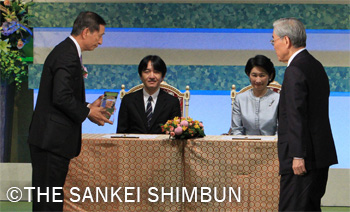
This is the second time that our company has won the Grand Prize at this awards, following the 25th awards (for "Sustainable urban and community development in harmony with abundant nature – Futako Tamagawa Rise").

President Takahashi (then, currently our Vice Director) and Director Horie (then, currently our Director) chatting with Prince and Princess Akishino at the awards ceremony.

[Global Environment Award Channel] Tokyu "Harmony between people, cities and the environment"

Tokyu Corporation "Harmony between people, the city, and the environment"
Solving social issues through urban and community development and "Sustainable management "

YouTube "Sankei News"

Including the efforts of Minami-Machida Grandberry Park,
The article introduces our efforts in urban and community development that aim for harmony with the environment.

Below we introduce the initiatives that our company and its group companies have undertaken thus far toward achieving the targets set out in our Environmental Vision 2030.

東急株式会社 社長室 ESG推進グループ 企画担当②

再生可能エネルギーへのアプローチ

Towards a decarbonized society

In order to contribute to the realization of a carbon-free society, we are working to further promote energy conservation and utilize renewable energy in each of our businesses.

[Use renewable energy] All Tokyu lines run on 100% renewable energy - Tokyu Lines -

From April 1, 2022, all Tokyu Line lines will be operated on 100% electricity derived from renewable energy with virtually zero CO2 emissions. This is the first initiative in Japan to operate all railway tracks with 100% electricity derived from renewable energy.
The Setagaya Line started operating on 100% renewable energy on March 25, 2019 (Electricity Anniversary), and has since expanded the scope to electricity used on railway 7 lines, including the Toyoko Line. In addition, the Tokyu Shin-Yokohama Line, which opened on March 18, 2023, has been added, and the railway 8 lines and the Setagaya Line have achieved virtually zero CO2 emissions due to TEPCO Energy Partner's renewable energy power menu*.

* Menu using non-fossil certificates with tracking that comply with RE100

SDGsトレイン
SDGs Train

SDGsトレイン車両(3020系 6020系 2020系)
SDGs train cars (3020 series, 6020 series, 2020 series)

In December 2023, this initiative received the Minister of the Environment Award in the Mitigation category of the Advanced Adoption and Active Practices category at the Ministry of the Environment's Climate Change Action Minister's Awards.

[Create renewable energy] Establishment of power plants through consumer-led introduction of renewable energy -Tokyu Kabukicho Tower, Shibuya Stream, Minami-Machida Grandberry Park-

Tokyu Corporation, Tokyu Recreation, Tokyu Malls Development Corporation, Tokyu Property Management, and Tokyu Power Supply have partnered with Osaka Gas Co., Ltd. and GPSS Holdings Co., Ltd. to develop an off-site corporate PPA model * for solar power generation to power the three complexes, Shibuya Stream, Minami-Machida Grandberry Park, and Tokyu Kabukicho Tower, using renewable energy. GDsPJ LLC, a joint venture between Osaka Gas and GPSS Holdings, will gradually supply renewable electricity to these three facilities from a newly established solar power plant. GDsPJ's power generation capacity at eight power plants nationwide totals approximately 9,000 kW, and the introduction of renewable energy at these three facilities will reduce CO2 emissions by a total of 24,000 tons. Amid rising energy prices and other obstacles to renewable energy adoption, close collaboration and partnerships among the parties will ensure affordable and stable procurement of renewable energy.
This initiative to reduce the environmental impact by establishing power plants at three iconic facilities: Shibuya, areas served by Tokyu’s railway lines, and in new businesses, is contributing to Tokyu's Urban and community development, which is evolving into a "city that coexists with the global environment."

*Off-site corporate PPA model: An electricity supply and procurement method in which power generation companies, retail electricity companies, and consumers enter into long-term, fixed-price power purchase agreements, on the premise that electricity will be supplied from a distant power plant to the place of demand via the power transmission and distribution grid.

Overview of the initiative

Overview of the initiative

Shibuya Stream

Shibuya Stream

Minami-machida grandberry park *Commercial facility section

Minami-machida grandberry park *Commercial facility section

Tokyu Kabukicho Tower

Tokyu Kabukicho Tower

In addition to this initiative, we are taking the initiative in collaborating with various industries.

[Energy Conservation and Energy Management] Aiming for zero incineration of old uniforms

Tokyu Railways has implemented various environmental measures with the goal of eliminating the incineration of approximately 52 tons of old uniforms, which will be discarded as part of the uniform renewal in November 2024.
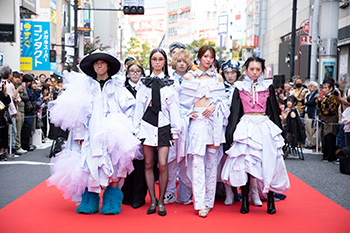
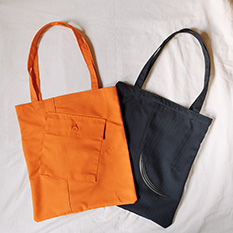
Through a variety of initiatives, including the adoption of chemical recycling to produce hydrogen and ammonia with almost no CO2 emissions, the sale of unused items, the distribution of upcycled items to employees, and the use of the items at the Shibuya Fashion Week Autumn 2024 event, the company plans to reduce CO2 emissions by approximately 140 tons, which would have been generated if the items had been incinerated.The project also contributed to raising environmental awareness among employees and residents living along areas served by Tokyu’s railway lines.


©SHIBUYA FASHION WEEK
A work remade by a fashion school student
Presenting on the runway


Tote bag made from old uniforms

[Energy conservation and energy management] Introduction of "People- and Environment-friendly Carriages" - Tokyu Lines -

Tokyu Railways has introduced the 5000, 6000, and 7000 series of trains, which are barrier-free and have improved on-board convenience and comfort under the concept of "People- and Environment-friendly Carriages." In March 2018, the company introduced the further evolved 2020 series on Den-en-toshi Line  and the 6020 series on the Oimachi Line. In November 2019, the 3020 series was introduced on the Meguro Line.
The new trains (2020 series, 6020 series, 3020 series) use low-noise traction motors and drive units, reducing noise along the line and outside the train by approximately 10 dB compared to the old trains (8500 series). In addition, the high-efficiency drive of the traction motors is achieved by a control unit using next-generation semiconductor elements, and LED lights are used for all interior lighting and headlights and taillights, reducing electricity consumption by approximately 50% compared to the old trains. Other improvements to comfort include the adoption of "nanoe *" air purifiers and high-back seats.

*Nanoe is a trademark of Panasonic.


Oimachi Line operation


Meguro Line operation

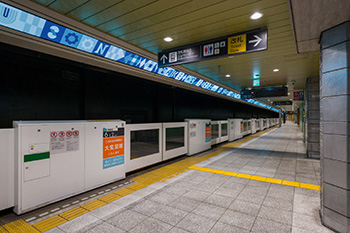
[Energy conservation and energy management] Aiming to be an "environmentally friendly station" -Motosumiyoshi Station-

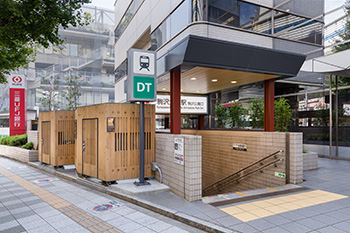
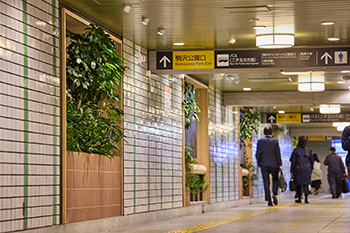
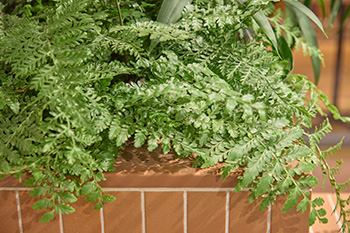
At Motosumiyoshi Station on the Toyoko and Meguro lines, a solar power generation system has been installed on the roof of the platform and above the concourse to utilize natural solar energy. With a rated generating capacity of 140kW, the system will generate approximately 86,000kWh in FY2022, covering approximately 10% of the station's electricity consumption. Other initiatives include recycling rainwater and greening the space in front of the ticket gates.
In addition to Motosumiyoshi Station, a solar power generation system with a generating capacity of 10kW (rated output) has also been installed at Kaminoge Station on the Oimachi Line.

Motosumiyoshi Station (solar power generation)

Motosumiyoshi Station (solar power generation)

Greening within stations

Greening within stations

[Decarbonizing the city] Switching to renewable energy for household electricity -areas served by Tokyu’s railway lines-

Tokyu Power Supply, an energy company in Tokyu Group, has adopted the corporate slogan "A new lifestyle experience, with energy," and is promoting the "Smart Green Project," which aims Urban and community development.
In March 2023, we added environmental value through non-fossil fuel certificates derived from renewable energy to our residential electricity service menu, and began offering electricity services that are essentially 100% renewable energy, with zero emissions of greenhouse gases such as carbon dioxide.
Electricity for home use emits approximately 1.5 tons of CO2 per year *1, and it is estimated that the 2.94 million households *2 in the 17 cities and areas served by Tokyu’s railway lines emit approximately 4.41 million tons of CO2 *3, equivalent to approximately 1,814 Tokyo Domes, in a year. Tokyu Power Supply offers its loyal customers along areas served by Tokyu’s railway lines the option to "take action for the global environment" simply by choosing "Tokyu Denki."

*1 Calculated based on average electricity consumption (3,600 kWh/year) and CO2 emissions (0.416 kg-CO2/kWh: FY22 preliminary figures) for Tokyu Denki users

*2 Calculated based on the number of households in the Basic Resident Register of 17 cities and wards areas served by Tokyu’s railway lines as of the end of August 2024.

*3 Standard conditions: 0°C, 1 atmosphere. The volume of the Tokyo Dome is 1,240,000 m3.

[Decarbonization of towns] Environmentally friendly urban and community development overseas -Binh Duong New City, Vietnam -

Bekamex Tokyu, which is expanding its business in the Socialist Republic of Vietnam, is working on a sustainable urban and community development project that is friendly to people and the environment in Binh Duong New City, Vietnam, utilizing the urban and community development know-how of Tokyu the Tama Den-en-toshi area.
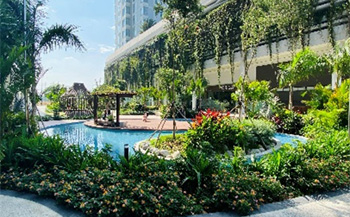
In the "SORA gardens" area at the entrance to the new city, the development concept of gardens was expressed through hanging gardens and wall greening, and a lush greenway was created for residents to relax. In the "MIDORI PARK" area, a detached housing area, seasonal flowers and water features are provided along with a high-quality living environment. In the "Hikari" commercial area, which focuses on food and beverage, we are not only introducing solar power generation, but also composting, aquaponics, and other recycling-based society initiatives.
Becamex Tokyu Bus, a wholly owned subsidiary of Becamex Tokyu Corporation, is working to promote a "modal shift" from motorcycles and cars to public transportation in Vietnam, where traffic congestion and air pollution are serious, by developing a bus network that can be easily used, utilizing its bus operation know-how cultivated in Japan. To reduce the environmental burden, the company is operating buses fueled by natural gas (CNG gas). Compared to conventional diesel vehicles, natural gas-fueled buses have a much lower environmental impact.

A route bus that runs on natural gas

Apartment Project
"SORA gardens"

Detached house area "MIDORI PARK"

Commercial facility "Hikari"

東急株式会社 社長室 ESG推進グループ 企画担当②

環境負荷低減へのアプローチ

Towards the realization of recycling-based society

With the aim of realizing recycling-based society, we are working to make effective use of resources and reduce greenhouse gas emissions at every stage of our business.

[Resource Utilization] Creating new products by reusing waste materials

The Izu Olive Mirai Project, run by Izukyu Holdings Co., Ltd. and With Olive Co., Ltd., faced the challenge of producing extra virgin olive oil, with nearly 95% of the fruit becoming "pomace (waste material)." In response, in October 2024, they began working with Kakitagawa Brewing Co., Ltd. to produce and sell craft beer using "pomace" as a secondary ingredient, aiming for zero-waste, circular agriculture. This has made it possible to utilize waste materials.
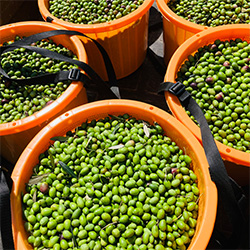

Harvested Izu olives


Made with Izu olives
Olive Pale Ale Lemon

[Resource Utilization] Reusing unwanted items by holding upcycling events

Nagano Tokyu Department Store is working on the "hug・eco project" as part of its "Regional Platformer" initiative, which aims to expand its involvement with various local products, people, and businesses. As part of this initiative, the store held a clothing upcycling event in collaboration with Oka Gakuen Total Design Academy, a fashion school in Nagano City.
Customers were asked to submit "a piece of clothing that holds memories" that they were no longer using, and the collected items, along with banners provided by Nagano Tokyu Department Store, were upcycled by Oka Gakuen students into other clothing and miscellaneous goods. In addition, after making preparations such as introducing the products for sale on Instagram Live, an exhibition and sale of 100 completed items was held in the main square of Nagano Tokyu Department Store. Many people came to visit. The original plan to reduce waste was featured in local media, and received a great response.


Collaborative broadcast with Oka Gakuen Total Design Academy
Instagram Live


Exhibition and sales event

[Resource Utilization] Effective use of water resources through the installation of recycled water facilities -Shibuya Scramble Square-

Shibuya Scramble Square, a large-scale complex that opened in November 2019, is taking steps to conserve Water Resources, leading to a reduction in water usage, with the aim of making effective use of water Water Resources and reducing the burden on sewerage facilities.
Wastewater from the restaurant's kitchen and miscellaneous wastewater is decomposed by microorganisms and purified with activated carbon at a recycled water treatment facility installed on the sixth basement floor of the building. The purified water is reused for flushing toilets, making effective use of Water Resources and reducing the burden on sewerage facilities.
In addition, the building is not limited to efforts within the building itself, but also aims to optimize energy consumption in the entire area around Shibuya Station. For example, solar panels are installed on the roof and greenery is planted on the south side of the building to reduce CO2 emissions, and heat sources (cold and hot) can be shared with surrounding facilities.


Shibuya Scramble Square exterior
(Courtesy of Shibuya Scramble Square)


recycled water facility
(Courtesy of Shibuya Scramble Square)

[Resource Use] Reducing CO2 emissions by reducing tap water usage - Tokyu Store -

Tokyu Store has reduced water usage and CO2 emissions by introducing new water-saving equipment in its kitchens. The pulsating flow water-saving valve changes the amount of water released when bubbles are created by mixing water and air, and hits the stains continuously, providing high cleaning power that can break down even stubborn stains. The water pressure and volume can be adjusted, allowing for water savings without reducing cleaning power, and another advantage is that it can be used continuously without requiring maintenance.
First, in 2017, a 49-day installation experiment was conducted at one store, and after confirming the water-saving effect, the system was introduced to each kitchen in the seafood and delicatessen departments of 84 business locations from May 2018. As a result, water usage was reduced by 97,065 m3 per year, and CO2 emissions were reduced by 33 t. This is equivalent to the annual CO2 reduction absorbed by approximately 2,300 artificial cedar trees.


Water saving valve

[Resource Utilization] Demonstration experiment of water recycling -Maipari Miyakojima Island Tropical Fruit Park-

Our company, Miyako Kanko Kaihatsu Co., Ltd., and Token Sangyo Co., Ltd. are conducting a demonstration experiment at Maipari Miyakojima Island Tropical Fruit Park in order to achieve the group-wide target for reducing Water Resources usage set out in "Environmental Vision 2040." This is an initiative in which gray water and sewage discharged from the "Maipari" facility are treated in existing wastewater septic tanks, and then further treated with newly introduced complex fermentation technology, and the water (reclaimed water) is recycled and reused for flushing the facility's toilets. Currently, the facility's tap water usage has been reduced by approximately 30%.
Complex fermentation not only purifies wastewater to a quality that meets environmental standards without using any chemicals such as chlorine, but also suppresses the generation of odors and sludge that can be problematic during the water purification process.Using reclaimed water as agricultural liquid fertilizer is expected to improve the soil and marine environment of Miyakojima, which relies solely on underground dams and groundwater for Water Resources, and also contribute to the conservation of Biodiversity.

まいぱり水循環実証実験
Maipari Water Circulation Demonstration Experiment

複合発酵設備付き20ftコンテナ(左側手前は既存排水浄化槽)
20ft container with composite fermentation equipment
(The existing wastewater septic tank is in the foreground on the left)

[Resource Utilization] Energy conservation efforts at a station and commercial facility – Shibuya Station and Shibuya Hikarie –

At underground stations, ventilation and air conditioning equipment consumes approximately 80% of the total power consumption of the station. Therefore, efforts to improve ventilation and air conditioning have a significant impact on the energy consumption of the entire station. Shibuya Station, a large station with five underground floors, has therefore adopted a large-scale natural ventilation system in conjunction with Shibuya Hikarie, a commercial facility directly connected to the station, achieving significant energy savings. In addition, a "radiant cooling system" has been adopted, in which cooling tubes are installed under the floor and in the ceiling of the platform to circulate cold water.
By using this natural ventilation system and radiant cooling method, which do not rely on machines, the annual electricity consumption will be reduced by approximately 2.91 million kWh in FY2023 compared to a building of the same size using conventional cooling equipment, which is equivalent to a reduction in CO2 emissions of approximately 1,620 tons.
Furthermore, Shibuya Hikarie employs "nighttime ventilation (night purge)," which reduces energy consumption by bringing in outside air at night, and also plants greenery on the rooftop and exterior.
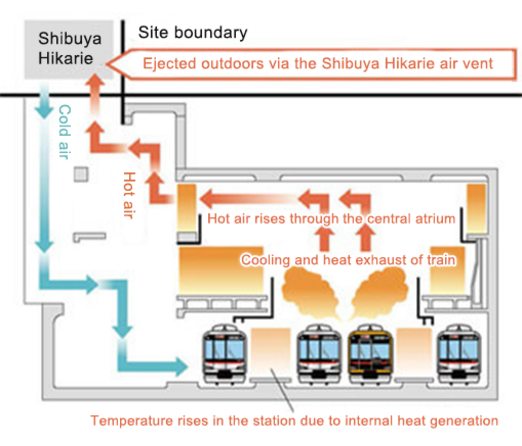

Shibuya Station's natural ventilation system
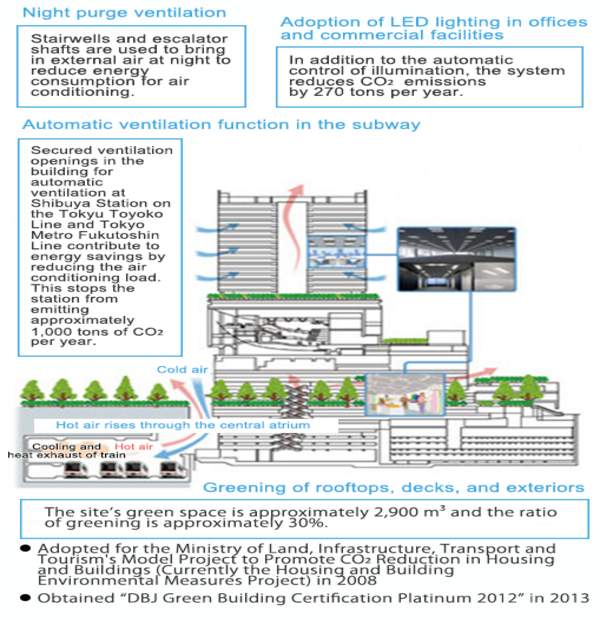

Environmental Considerations at Shibuya Hikarie

[Resource Utilization] Building an electricity circulation system at a hotel -Kawasaki King Skyfront Tokyu Rei Hotel-

Kawasaki King Skyfront Tokyu Rei Hotel, which opened in June 2018, is the world's first hydrogen hotel, using hydrogen derived from used plastics to generate electricity and hot water. However, its utilization extends beyond this. The hotel hydroponically grows lettuce in the lobby using hydrogen-derived electricity, and serves the harvested lettuce at the buffet. The hotel also achieves a 100% recycling rate by providing food waste as raw material for biomass power generation at its power generation facility. Furthermore, the hotel has established a recycling system in which the generated electricity is repurchased through a power retailer and used at the hotel. By implementing the Zero Emission Plan® *, a 100% renewable energy plan, the hotel has achieved a carbon-free electricity consumption, with 30% of its total electricity coming from hydrogen energy and 70% from renewable energy. This reduces CO2 emissions by approximately 419 tons per year (equivalent to the emissions of approximately 47,600 cedar trees), contributing to the realization of a decarbonized, recycling-based society.

*An environmentally conscious electricity supply plan that uses FIT electricity as its power source and non-fossil fuel certificates and J-Credits to achieve 100% renewable energy.

Exterior of "Kawasaki King Skyfront Tokyu Rei Hotel"

Installing a pure hydrogen fuel cell system

Leaf lettuce grown at the hotel

[Resource Utilization] Reducing Plastic Cutlery - Tokyu Store -

In April 2022, the Act on Promotion of Resource Circulation Related to Plastics (Plastic Resource Circulation Promotion Act) came into effect to strengthen businesses' efforts to reduce plastic. In response to this, Tokyu Store is considering reducing the amount of plastic cutlery (spoons, forks, straws, etc.) that is distributed free of charge in stores. All stores have switched to wooden and paper cutlery, achieving a reduction of 21.1 tons of plastic per year and making a significant contribution to environmental protection. The cutlery after the material change is produced from forests that are properly managed with the aim of sustainable forest utilization and conservation, which also contributes to forest protection.
As part of advance awareness-raising activities, we carried out measures such as posting posters on our website and in stores, and received a lot of positive feedback from customers.

In-store posters

新しい無料配布のカトラリー 新しい無料配布のカトラリー

Free new cutlery

[Zero Waste] Effective use of rolling stocks - Transfer to railway companies -

The former 7000 series, which appeared in 1962 as Japan's first all-stainless steel railcars, was transferred to railway Konan railway (Aomori Prefecture), Hokuriku Railway (Ishikawa Prefecture), and Mizuma railway (Osaka Prefecture) after being retired from Tokyu Lines in 2000, and is still in use today. Compared to recycling through dismantling railcars, this has less of an environmental impact, and it allows the railcars to be updated at low cost to the railway to which they are transferred.
Additionally, the 7700 series, which was created in 1987 by modifying the old 7000 series, was retired from Tokyu Lines in November 2018 and transferred to the Yoro Railway (Gifu Prefecture and Mie Prefecture). After being modified for the Yoro Railway, including changing the exterior design and installing cross seats in some of the middle cars of the three-car train, it completed test runs and began commercial operation in April 2019. It is scheduled to continue running on the Yoro Railway for approximately 30 years from now.


The 7700 series that ran on the Tokyu Line


7700 series train running on the Yoro Railway

[Coexistence with Nature] Sustainable Urban and community development in harmony with abundant nature - Futako Tamagawa Rise

Futako Tamagawa Rise is a complex consisting of commercial facilities, offices, a hotel, and residential blocks. For the future of our children and the planet, we are working to create a safe and secure Urban and community development people are the main focus, while also being mindful of the environment.
Energy-saving equipment and renewable energy are being adopted in infrastructure facilities such as buildings and roads throughout the area, and efforts are being made to reduce energy consumption and CO2 emissions. Excellent transportation access is ensured via Den-en-toshi Line, Oimachi Line, and various bus lines, and a high-density, compact, multi-functional city is being developed, concentrating commercial, office, public facilities, and housing. A rooftop garden designed as an "ecomuseum" has also been placed on the roof. By planning it as a hub connecting the Tama River and the Kokubunji Cliff Line, the foundation of a biological network has been established. By striving to achieve Biodiversity the number of insects and birds visiting the area has increased, and spot-billed ducks can now be seen incubating eggs.
These efforts were recognized, and in 2015 the building became the first in the world to receive Gold certification *1 from the international environmental certification system, LEED ND (Neighborhood development category). The certification drew a wide range of attention, with a surge in visits from environmental and construction professionals from both within Japan and overseas. It also led to the building winning the 25th Global Environment Award (Grand Prix) *2, sponsored by Fujisankei Communications Group which aims to achieve "coexistence between industrial development and the global environment."
Futako Tamagawa Rise has been recognized for its efforts to maintain and preserve the Tama River ecosystem, receiving the highest AAA rating from the Japan Japan Habitat Evaluation and Certification Program (JHEP), a domestic third-party system that evaluates projects that enhance Biodiversity.

*1 LEED®, offered by the U.S. Green Building Council (USGBC), is an evaluation and certification program that contributes to the design, construction, and maintenance of high-performance green buildings. LEED® and its logo are registered trademarks of the USGBC and may be used with permission.

*2 Global Environment Award: An award system established with the aim of "coexistence between industrial development and the global environment," bringing together businesses, government, and citizens.


A sustainable city that eliminates waste of energy and resources

Winner of the 25th Global Environment Award

Futako Tamagawa Rise is blessed with a natural environment close to the Tama River and the Kokubunji Cliff Line.

東急株式会社 社長室 ESG推進グループ 企画担当②

生物多様性保全へのアプローチ

Building a collaborative system for a decarbonized, recycling-based society

In order to realize a decarbonized and recycling-based society, we are forming partnerships and communities, and working together to solve problems on a "surface" level rather than a "point" level.

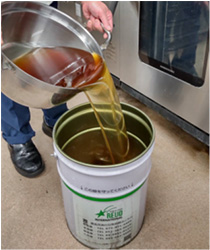
[Local Government/Regional Collaboration] Utilizing Waste Cooking Oil: FRY to FLY Project

The company is participating in a project to collect and reuse used cooking oil to refine sustainable aviation fuel (SAF) with low CO2 emissions. Starting in fiscal 2025, seven facilities operated by the company will participate in the project, aiming to reduce the shopping center's CO2 emissions and environmental impact by reducing waste. The company plans to collect approximately 84,000 liters of used cooking oil per year, the largest amount among shopping center operators, which will enable a reduction of 84 to 200 tons of CO2 per year.


Project promotional poster


Waste cooking oil as raw material for SAF

[Local Government/Regional Cooperation] Local production and consumption of renewable energy and building a regional energy platform

Tokyu Power Supply and Kawasaki Mirai Energy Co., Ltd., together with business partners Kawasaki City and NTT Anode Energy Corporation, and financial institution partners Kawasaki Shinkin Bank, Ceresa Kawasaki Agricultural Cooperative, Kiraboshi Bank, Ltd., and Yokohama Bank, Ltd., totaling six companies, established Kawasaki Mirai Energy Co., Ltd., and began operations in April 2024.
Kawasaki Mirai Energy will supply waste-derived electricity generated at the Kawasaki City Treatment Center to public and private facilities in the city, promoting regional self-reliant decarbonization and local production and consumption of renewable energy, and aims to become the core of a regional energy platform in which a variety of stakeholders, including citizens, businesses, and financial institutions, can participate.

[Local Government / Regional Cooperation]  Urban and community development Green Infrastructure -Minami-Machida Grandberry Park-

Minami-Machida Grandberry Park, which opened in 2019 as a result of the integrated redevelopment of the station, commercial facilities, and urban park by our company, Tokyu Railways, in collaboration with Machida city, is a seamless town with a series of open spaces that take advantage of the fusion of bustle and greenery, based on the concept of the whole town becoming a "park"."
By adopting permeable pavement and bioswells throughout the area, a system has been put in place to return some of the rainwater to the ground, and rainwater management is being carried out using green infrastructure *1.
These efforts have been recognized, and the building has received Gold certification from the international environmental certification system "LEED ND (Neighborhood development category)." *2 This is the first time in Japan that a building has received Gold certification that includes a station within its certified area.
In addition, by planting flowers and fruit-bearing trees on the exterior of the commercial facility "Grandberry park," we aim to encourage birds and insects to live there, and to blend nature with lively activity.

*1 Utilizing the functions of the natural environment to develop social infrastructure and manage land.

*2 LEED®, offered by the U.S. Green Building Council (USGBC), is an evaluation and certification program that contributes to the design, construction, and maintenance of high-performance green buildings. LEED® and its logo are registered trademarks of the USGBC and may be used with permission.


Park Plaza leading to the park


Bioswell (Ame no Michi)

[Local Government/Regional Cooperation] Station Improvement Works Carried Out in Collaboration with the Local Community - Ikegami Station and Etomo Ikegami -

Ikegami Station on the Ikegami Line has been loved by users for many years for its historic wooden station building, but to eliminate the level crossing within the station premises, ensure safety, and eliminate the division of the town caused by the tracks, the station building was improved and a station building was developed to include the commercial facility "Etomo Ikegami." In order to inherit and develop the "memories" of the old station building and the temple town, this construction focused on the use of wood to create a warm and inviting space. In addition to using a large amount timber from the Tama area, the entire facility secured a carbon storage capacity of 14 t-CO2, and the "Minna no Ekimoku Project" was implemented to reuse the old "ekimoku" wood from the old station building.
This project involved distributing "Ekimoku Bench Kits" to local residents. By getting everyone involved to share the same philosophy and carrying out the project together with the local community, wooden benches reminiscent of the old station building were scattered throughout the city, fostering a sense of unity in the community.


Ikegami Station. The route to the concourse surrounded by trees


A bench made with the "Ekimoku Bench Kit"

[Local Government/Regional Cooperation] Roof Garden as a "Place of Learning" - Futako Tamagawa Rise -

Futako Tamagawa Rise has installed a roof garden on the rooftop of the facility, which is home to a wide variety of creatures and plants that have created a biological network connecting the waterside of the Tama River, the Kokubunji Cliff Line, and the greenery of Todoroki Valley, and maintains and preserves the local ecosystem. The vast rooftop green facility, covering an area of approximately 6,000 m2, is not only a place of relaxation for local residents and facility users, but also serves as a place of learning through various events.
The vegetable gardening experience event, where participants sow and harvest vegetables, provides children with an opportunity to learn about the growing process of familiar vegetables, contributing to "food education." At the event where participants can collect and research creatures in the biotope "Killifish pond" and observe the endangered plant "Aster kantoensis," participants can observe, sketch, and craft, and experts will give lectures on the creatures and plants that live in the Tama River, providing an opportunity to learn more about the local environment.


Parent and child vegetable gardening experience


Piotope "killifish pond"

[Industry-academia/shareholder collaboration] Initiatives to promote the spread of blended biofuels

In September 2023, Tokyu Bus, Tokyo City University, and Euglena Co., Ltd. were selected as operators of the Tokyo Metropolitan Government's "Biofuel Utilization Commercialization Promotion Support Project." This is a project in which the Tokyo Metropolitan Government supports efforts to commercialize vehicles, ships, aircraft, etc. that use environmentally friendly biofuels (biodiesel, SAF, etc.).
Through collaboration between industry and academia, the three parties will operate 150 Tokyu Bus route buses using biofuel, and will also investigate what "environmental charges" should be, in order to consider a system for promoting public transportation with a lower environmental impact.
We will work to let as many people as possible, including bus passengers, know about our sustainable efforts using biofuels.


Bus wrapping designed by students from Tokyo City University (Tokyu Bus vehicles)

▼Click on the image to view the web page▼

Web page "Green Transportation City ECO CITY".
Widely disseminate information about biofuels and Tokyu Bus 's decarbonization efforts

[Industry-academia/shareholder collaboration] Demonstration experiment of Perovskite solar cell-the Tama Den-en-toshi area (Nexus Concept) -

On February 11, 2023, Toin Gakuen School Corporation, our company, Tokyu Railways, and Yokohama City conducted a pilot experiment of Perovskite solar cell (hereinafter referred to as the "cells") in the free passage in front of the main ticket gate of Aobadai Station Den-en-toshi Line. This experiment is part of the "Nexus Concept" and is based on the agreement on mutual cooperation in "education" and "energy" concluded between Toin Gakuen, our company, and Tokyu Railways, as well as the "Agreement on the Construction of a Decarbonized Society and the Promotion of Sustainable and Attractive Living" concluded between Yokohama City and Toin Gakuen. The results of the experiment, which was conducted with the cooperation of Toshiba Energy Systems & Solutions Corporation using a large-area (703 cm²) film-type Perovskite solar cell, will be used to consider future utilization methods, such as installation on assets owned by each party (existing buildings, stations, vehicles, viaducts, etc.).
On the same day, the "Zero Carbon Festival Starting from Garden City" was held at Splus Aobadai, a community exchange hub located a three-minute walk from Aobadai Station, providing an opportunity for local residents to experience the battery.
The four parties will continue to work together, taking into account the progress of practical application of the battery.

フィルム型ペロブスカイト太陽電池
Film-type Perovskite solar cell

「田園都市からはじめるゼロカーボンフェスタ」でのペロブスカイト太陽電池でプロペラを回す、N ゲージを走らせる様子
At the "Zero Carbon Festival Starting from Garden City"
Perovskite solar cell power propellers
Running an N gauge train

東急株式会社 社長室 ESG推進グループ 企画担当②