Recognition of issues and response policy
As business activities of the Company and its consolidated subsidiaries depend on the rich natural environment where various living organisms interact, we recognize that biodiversity conservation is an important environmental issue not only in our own business but also in the entire supply chain. As real estate development is particularly closely related to the natural environment and ecosystems, we will carry out environmental impact assessments and obtain environmental certification in compliance with laws and regulations, and will consider creating green spaces and waterfront spaces and reducing the impact on ecosystems in each area where our business is involved, and will work to create urban and community development and operate businesses that are safe and comfortable to live in, thereby striving to preserve and restore the natural environment. We will utilize the knowledge we have gained through our business along areas served by Tokyu’s railway lines to work on town urban and community development takes into consideration the conservation of biodiversity and the reduction of impacts even in developments outside of our line areas, such as in regional cities and overseas.
Information disclosure based on the TNFD recommendations
the Company and its consolidated subsidiaries support the philosophy of the Task Force on Nature-related Financial Information Disclosures (hereinafter referred to as TNFD) and will strive to proactively disclose information based on the TNFD information disclosure framework. The TNFD report, which references the "TNFD Final Recommendations v1.0" published in September 2023, is as follows:
Tokyu Corporation TNFD Report
Initiative Targets
Our company's "Environmental Vision 2040" sets out 11 specific action targets. One of these is "Coexistence with Nature," which is one of the actions related to recycling-based society. The action targets "At our business locations, we will consider nature and Biodiversity and provide a living environment that allows people to come into contact with the natural environment," and "We will conserve nature and Biodiversity, reforest, engage in green infrastructure, conduct environmental assessments, obtain environmental certifications, and procure materials and sell products that are sustainable."
Consideration for Biodiversity
Biodiversity risk assessment
■ New Project
When the Company and its consolidated subsidiaries undertake new development projects, including railway and real estate businesses, we conduct environmental impact assessments in accordance with laws and regulations during the development permit application and building permit application process. Specifically, we confirm the presence or absence of trees and other natural environments (such as endangered species) that should be preserved in the development area, and carry out preservation as necessary. We also take measures and implement greening in accordance with laws and regulations related to nature conservation, and we strive to harmonize the layout of plantings and the selection of tree species with the natural environment surrounding the development area.
■ Existing Projects
the Company and its consolidated subsidiaries have evaluated the dependence on and impact on nature, as well as accessibility to protected areas and important habitats, for existing locations in our main businesses of transportation, real estate, hotel resorts, and life service business, using the TNFD's LEAP approach and ENCORE, and disclosed this as a TNFD report in September 2025. Even after the analysis, we continue to consider, evaluate, and manage sustainability risks, including nature-related risks, when conducting risk analyses for each business and company every year. In the TNFD analysis for fiscal year 2025, we identified two priority locations. The following are examples of initiatives at these priority locations, including ecological surveys and conservation measures implemented in collaboration with experts.
Restoring and conserving Biodiversity
Initiatives at Futako Tamagawa Rise
Futako Tamagawa Rise is a complex (total development area approx. 11.2 ha) consisting of commercial facilities, offices and high-rise residential buildings adjacent to Futako Tamagawa Station (Setagaya-ku, Tokyo) on Tokyu Den-en-toshi Line and Oimachi Line. The following initiatives are being undertaken in the Futako Tamagawa Rise II-a block. These initiatives have earned the building an AAA rating from the JHEP Certification.
1) Urban and community development with the natural environment
The site is located on the north side of the Tama River, and is surrounded by the Musashino Plateau, the Kokubunji Cliff Line, and Todoroki Valley. In order to restore and preserve the natural environment from before development, the landscape plan is based on the idea of an "ecomuseum" that aims to connect the life in the area and create a natural environment, and a rooftop garden with a green space ratio of over 40% of the site is arranged. In particular, aiming to "create a space rooted in the community", a planting plan is being made using local seeds and seedlings from the Tama River basin that incorporate wild plants and trees found in the surrounding area, creating a space that connects the ecosystem of the Tama River adjacent to the site.
2) Learning from the local natural environment
The expansive rooftop garden, covering approximately 6,000 square meters, includes an area that recreates the Tama River bank, as well as an area dedicated to the conservation of endangered Aster kantoensis, a plant that is representative of the Tama River bank. A biotope has also been established with the aim of restoring the Tama River ecosystem, and hundreds of species, including Japanese killifish, loaches, Japanese minnows, and turtles, have been established, recreating the river's unique natural environment. Many birds and dragonflies also visit the garden. The rooftop garden not only serves to preserve the local ecosystem, but also serves as a place of relaxation for local residents and facility users, and a place of learning where participants can experience the local natural environment and ecosystem through various events.
<Creatures you can see in the roof garden>
plant
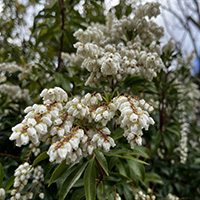
Andromeda
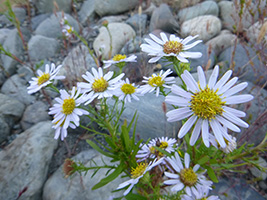
Aster kantoensis
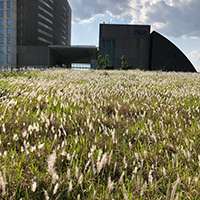
Chigaya
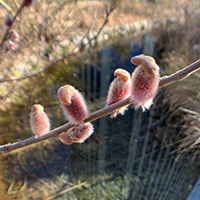
pussy willow
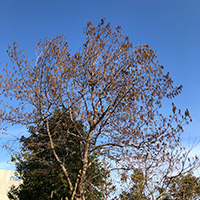
Alder
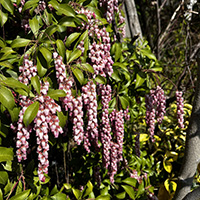
Beniazebi
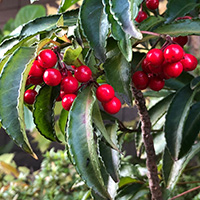
Manryo
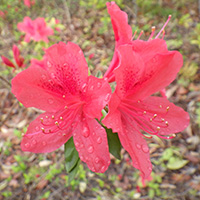
Mountain azalea
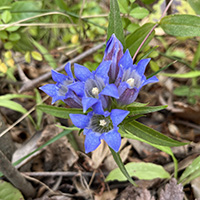
Gentian
animal
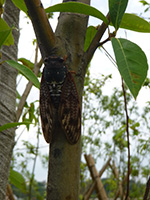
Brown cicada
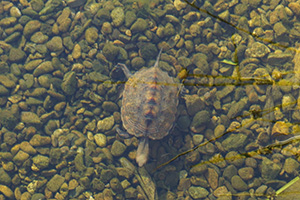
Japanese pond turtle
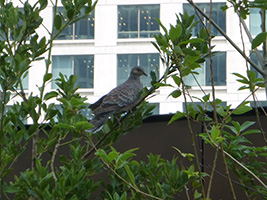
Oriental Turtle Dove
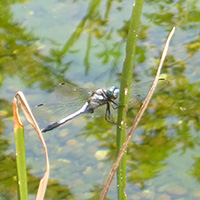
White-tailed skimmer
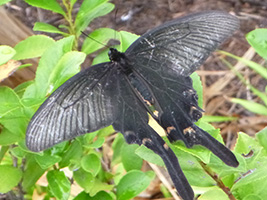
Chinese swallowtail butterfly
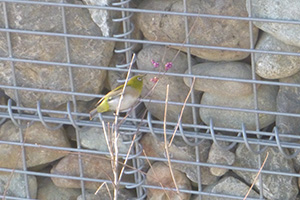
Japanese white-eye
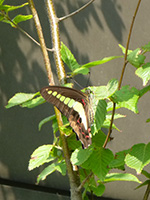
Bluebottle
Development of the biodiversity model district park "Miyamae Utsukushinomori Park"
We have been developing the "the Tama Den-en-toshi area" area along Tokyu Den-en-toshi Line Line since 1959. The "Inukura District Land Readjustment Project," completed in 2006, is located in Kawasaki City, approximately 1 km from the north exit of Tama-Plaza Station, and development of this 18-hectare area was carried out with "consideration for the natural environment" as one of the basic policies.
The area is part of the source of the Yagami River, which is part of the Tsurumi River system, and the rice fields, well-maintained by the landowners, are home to fireflies and loaches. Based on this, the preservation of habitats for rare species was prioritized, and in consultation with local residents and conservation groups, and with the cooperation of the local elementary school, Miyamae Utsukushinomori Park was developed as a model district park for Biodiversity. The park was transferred to Miyamae Ward, Kawasaki City after the land readjustment project was completed.
Greening at Tokyu Hospital
Tokyu Hospital, located above Ookayama Station on Tokyu Meguro Line and Oimachi Line *1, has planted large amounts of greenery on its walls and rooftop in an effort to blend in with the surrounding environment. In particular, wires *2 have been stretched across the south and west walls, with 4,200 ivy plants of seven varieties wrapped around them. This greening reduces direct sunlight and cuts down on electricity consumption in the interior space. It also reduces heat dissipation from the building, helping to prevent global warming. As a hospital that contributes to the local community, we will continue to cultivate greenery with an eye to the next 10 years and beyond.
- *1This is Japan's first "station hospital" directly connected to a station.
- *2The spacing between the wires is determined based on predicted ivy growth 10 years from now.
Dialogue to reduce Biodiversity loss
Dialogue with the government and local administrations
Tokyu Hotels, a member of our group, has been collaborating with Tambayama Village in Yamanashi Prefecture since April 2008 to reduce Biodiversity loss. Under the "Tokyu Hotels Green Coin Forest" activity agreement, the four parties—Tambayama Village, the OISCA Foundation, landowner representatives, and Tokyu Hotels—we are carrying out forest creation activities aimed at conserving forest ecosystems. In conducting these activities, we hold exchange meetings with stakeholders, including the Tambayama Village Office, to discuss the current state and challenges of the village's forests and future forest creation policies, and incorporate these discussions into our activities.
Dialogue with NGOs and organizations
Tokyu Corporation endorses the "Keidanren Biodiversity Declaration and Action Guidelines" and discloses its future Biodiversity initiatives on the "Keidanren Biodiversity Initiative" website.
Furthermore, our group company, Tokyu Hotels, has introduced the "Green Coin System" to show our commitment to protecting the global environment. The Green Coin System allows guests to bring a "Green Coin" to the front desk without using designated amenities in their room (such as toothbrushes and razors) during their stay. The equivalent value of the unused amenities is then donated to a fund for environmental conservation activities. This fund is provided to the international NGO, OISCA, to support their "Children's Forest" project, a global greening initiative. To date, a total of 2,298,665 Green Coins have been donated and used to support their activities.
Dialogue with Local Community
Our company is working in collaboration with local Urban and community development and greening organizations to conserve greenery and Biodiversity in the areas along our railway lines.
Since 1959, our company has been involved in land readjustment and residential development projects in the Tama Den-en-toshi area, along the Tokyu Den-en-toshi Line Line. To promote the greening of the residential areas we have developed, we have been conducting the "Tokyu Line Greening Campaign" every year from 1972 to 2011, giving saplings to residents along the line. Over approximately 40 years, we have distributed a total of 223,000 saplings. In 2012, this evolved into Mido*Link Action, in which we support particularly outstanding projects from among the local community Urban and community development and greening activity plans submitted through a public call for proposals, thereby supporting community building through "Urban and community development and greening."
We provide support to each group selected by our company through a review process, taking into consideration factors such as the scale of their projects. In addition, we hold the "Mido*Link" conference once a year, where representatives from NPOs and local support groups report on their activities. The conference also includes an exchange of ideas where members of the support groups gather around tables to share information about their activities and deepen their relationships. Through these activities, we aim to "link" (connect) "Urban and community development and greening" efforts, creating an increasingly "rich and vibrant town" that connects to the future, together with the local community.
River basin environmental conservation activities
In 1974, the Tama River, which at the time ran through the center of our business area, was suffering from serious water pollution problems due to the rapid population concentration that accompanied rapid economic growth. We therefore felt it was our important responsibility to purify the environment of the Tama River basin, and established the Tokyu Foundation for Environmental Purification to conduct water quality surveys of the Tama River and provide research grants to researchers. Since then, the water quality of the Tama River has gradually improved, and by the 1980s it had almost regained its former clarity. The foundation was later renamed the Tokyu Foundation for Better Environment, and has provided grants not only for water quality-related projects, but also for a wide range of research into environmental conservation and improvement of the Tama River basin, and the activities of private non-profit organizations (NGOs/NPOs, etc.) through the following projects:
- Research Grant Program: Implementing an environmental grant program for environmental conservation and improvement of the Tama River and its basin
- Activity support project: Support and subsidy for public lectures, seminars, events, etc. related to environmental restoration of the Tama River and its basin, and presentation of the Tokyu Foundation Social Contribution Environmental Academic Award
- Awareness-raising activities: Publication of "Tama River Foundation News" and environmental education supplementary textbook "Welcome to the Tama River" and distribution of the book free of charge to elementary schools in the river basin
In 2019, the Tokyu Environmental Foundation was merged with the Tokyu International Student Scholarship Foundation and the Gotoh Memorial Foundation to form the Tokyu Foundation. We will continue to contribute to solving social issues while protecting the environment in the Tama River basin.
Tokyu Foundation Environmental Activities
Biodiversity certification
the Company and its consolidated subsidiaries support the philosophy of the Task Force on Nature-related Financial Information Disclosures (hereinafter referred to as TNFD) and strive to proactively disclose information based on the TNFD information disclosure framework. We have issued a TNFD report with reference to the "TNFD Final Recommendations v1.0" announced in September 2023, and as part of our efforts to promote measures aimed at thorough ecosystem conservation and biodiversity conservation, we are systematically working to obtain environmental certification.
JHEP Certification
Block II-a of Futako Tamagawa Rise, a commercial and residential complex jointly developed by our company and Tokyu Land Corporation Corporation, received the highest AAA rating in 2014 from the Japan Habitat Evaluation and Certification Program (JHEP Certification), the only Biodiversity evaluation and certification program in Japan, run by the Ecosystem Conservation Society-Japan, a public interest incorporated foundation.
Futako Tamagawa Rise is a complex (total development area of approximately 11.2 hectares) consisting of commercial facilities, offices, and high-rise residential buildings adjacent to Futako Tamagawa Station (Setagaya Ward, Tokyo) on Tokyu Den-en-toshi Line-toshi Line and Oimachi Line, and the Futako Tamagawa Rise II-a block has been certified. Under the new initiative of an "ecomuseum" that creates value for the local environment, the complex incorporates the rich natural surroundings, including the Tama River, the Musashino Plateau, the Kokubunji Cliff Line, and Todoroki Valley, and actively reflects the varied topography to build the foundation for a biological network that connects ecosystems.
JHEP Certification
ABINC Certification
Dresser Chuo-rinkan (Yamato City, Kanagawa Prefecture), which we participated in and developed as a business owner, has been recognized for its efforts to create an environment that blends in with the surrounding environment and allows residents to have a friendly relationship with living creatures, and has received the ABINC certification (apartment complex version).
We have created a large green space on the premises to create a mixed forest, and by selecting a wide variety of plants (72 species, approximately 30,000 trees) that provide food for birds and insects (butterflies), we have provided a space for residents to come into contact with nature. We have also taken care to conserve water by using wood chips and creating rainwater infiltration trenches.
ABINC Certification
Biodiversity Audit
The II-a block of the Futako Tamagawa Rise complex received a AAA rating in 2014 under the Japan Health and Environmental Protection Program (JHEP) biodiversity assessment and certification system run by the Ecosystem Conservation Foundations-Japan. Renewal audits are conducted every five years, and the block underwent its first renewal audit in 2019, and as a result it continued to receive a AAA rating.
