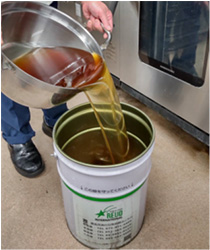
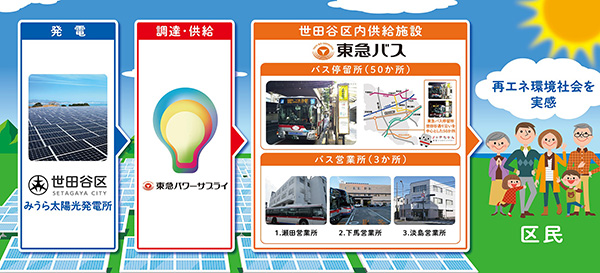
With the aim of realizing recycling-based society, we are working to make effective use of resources and reduce greenhouse gas emissions at every stage of our business.
[Resource Utilization] Creating new products by reusing waste materials
The Izu Olive Mirai Project, run by Izukyu Holdings Co., Ltd. and With Olive Co., Ltd., faced the challenge of producing extra virgin olive oil, with nearly 95% of the fruit becoming "pomace (waste material)." In response, in October 2024, they began working with Kakitagawa Brewing Co., Ltd. to produce and sell craft beer using "pomace" as a secondary ingredient, aiming for zero-waste, circular agriculture. This has made it possible to utilize waste materials.
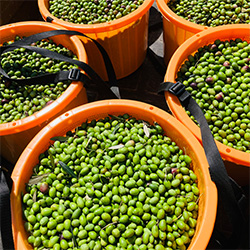
Harvested Izu olives
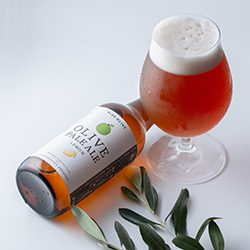
Made with Izu olives
Olive Pale Ale Lemon
Related page (Izu Olive Future Project)
[Resource Utilization] Reusing unwanted items by holding upcycling events
Nagano Tokyu Department Store is working on the "hug・eco project" as part of its "Regional Platformer" initiative, which aims to expand its involvement with various local products, people, and businesses. As part of this initiative, the store held a clothing upcycling event in collaboration with Oka Gakuen Total Design Academy, a fashion school in Nagano City.
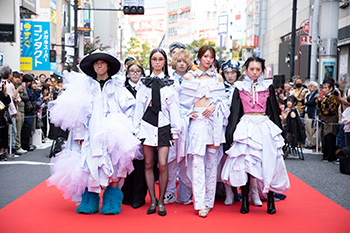
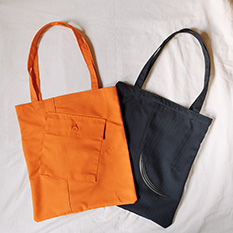
Customers were asked to submit "a piece of clothing that holds memories" that they were no longer using, and the collected items, along with banners provided by Nagano Tokyu Department Store, were upcycled by Oka Gakuen students into other clothing and miscellaneous goods. In addition, after making preparations such as introducing the products for sale on Instagram Live, an exhibition and sale of 100 completed items was held in the main square of Nagano Tokyu Department Store. Many people came to visit. The original plan to reduce waste was featured in local media, and received a great response.

Collaborative broadcast with Oka Gakuen Total Design Academy
Instagram Live

Exhibition and sales event
Related page (Nagano Tokyu Department Store 's Environmental Initiatives)
Related Release (Announcement of the "Clothing Collection Event" Industry-Academia Collaboration Project)
[Resource Utilization] Effective use of water resources through the installation of recycled water facilities -Shibuya Scramble Square-
Shibuya Scramble Square, a large-scale complex that opened in November 2019, is taking steps to conserve Water Resources, leading to a reduction in water usage, with the aim of making effective use of water Water Resources and reducing the burden on sewerage facilities.
Wastewater from the restaurant's kitchen and miscellaneous wastewater is decomposed by microorganisms and purified with activated carbon at a recycled water treatment facility installed on the sixth basement floor of the building. The purified water is reused for flushing toilets, making effective use of Water Resources and reducing the burden on sewerage facilities.
In addition, the building is not limited to efforts within the building itself, but also aims to optimize energy consumption in the entire area around Shibuya Station. For example, solar panels are installed on the roof and greenery is planted on the south side of the building to reduce CO2 emissions, and heat sources (cold and hot) can be shared with surrounding facilities.

Shibuya Scramble Square exterior
(Courtesy of Shibuya Scramble Square)

recycled water facility
(Courtesy of Shibuya Scramble Square)
Related page (Shibuya Scramble Square Environmental Initiatives)
[Resource Use] Reducing CO2 emissions by reducing tap water usage - Tokyu Store -
Tokyu Store has reduced water usage and CO2 emissions by introducing new water-saving equipment in its kitchens. The pulsating flow water-saving valve changes the amount of water released when bubbles are created by mixing water and air, and hits the stains continuously, providing high cleaning power that can break down even stubborn stains. The water pressure and volume can be adjusted, allowing for water savings without reducing cleaning power, and another advantage is that it can be used continuously without requiring maintenance.
First, in 2017, a 49-day installation experiment was conducted at one store, and after confirming the water-saving effect, the system was introduced to each kitchen in the seafood and delicatessen departments of 84 business locations from May 2018. As a result, water usage was reduced by 97,065 m3 per year, and CO2 emissions were reduced by 33 t. This is equivalent to the annual CO2 reduction absorbed by approximately 2,300 artificial cedar trees.

Water saving valve
Related page (Tokyu Store's SDG Initiatives)
[Resource Utilization] Demonstration experiment of water recycling -Maipari Miyakojima Island Tropical Fruit Park-
Our company, Miyako Kanko Kaihatsu Co., Ltd., and Token Sangyo Co., Ltd. are conducting a demonstration experiment at Maipari Miyakojima Island Tropical Fruit Park in order to achieve the group-wide target for reducing Water Resources usage set out in "Environmental Vision 2040." This is an initiative in which gray water and sewage discharged from the "Maipari" facility are treated in existing wastewater septic tanks, and then further treated with newly introduced complex fermentation technology, and the water (reclaimed water) is recycled and reused for flushing the facility's toilets. Currently, the facility's tap water usage has been reduced by approximately 30%.
Complex fermentation not only purifies wastewater to a quality that meets environmental standards without using any chemicals such as chlorine, but also suppresses the generation of odors and sludge that can be problematic during the water purification process.Using reclaimed water as agricultural liquid fertilizer is expected to improve the soil and marine environment of Miyakojima, which relies solely on underground dams and groundwater for Water Resources, and also contribute to the conservation of Biodiversity.

Maipari Water Circulation Demonstration Experiment

20ft container with composite fermentation equipment
(The existing wastewater septic tank is in the foreground on the left)
Related Release (Maipari Water Circulation Demonstration Experiment)
[Resource Utilization] Energy conservation efforts at a station and commercial facility – Shibuya Station and Shibuya Hikarie –
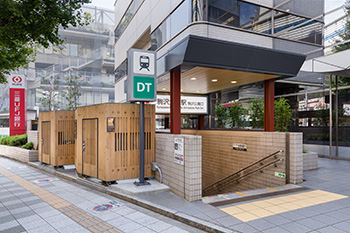
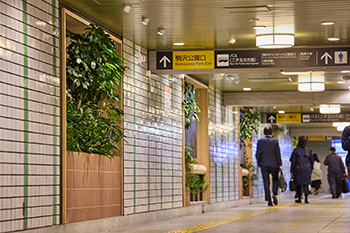
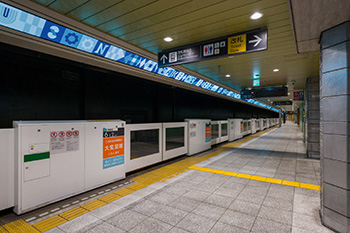
At underground stations, ventilation and air conditioning equipment consumes approximately 80% of the total power consumption of the station. Therefore, efforts to improve ventilation and air conditioning have a significant impact on the energy consumption of the entire station. Shibuya Station, a large station with five underground floors, has therefore adopted a large-scale natural ventilation system in conjunction with Shibuya Hikarie, a commercial facility directly connected to the station, achieving significant energy savings. In addition, a "radiant cooling system" has been adopted, in which cooling tubes are installed under the floor and in the ceiling of the platform to circulate cold water.
By using this natural ventilation system and radiant cooling method, which do not rely on machines, the annual electricity consumption will be reduced by approximately 2.91 million kWh in FY2023 compared to a building of the same size using conventional cooling equipment, which is equivalent to a reduction in CO2 emissions of approximately 1,620 tons.
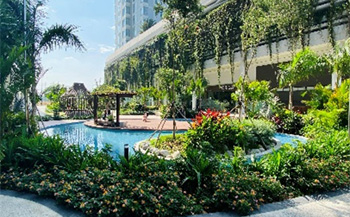
Furthermore, Shibuya Hikarie employs "nighttime ventilation (night purge)," which reduces energy consumption by bringing in outside air at night, and also plants greenery on the rooftop and exterior.
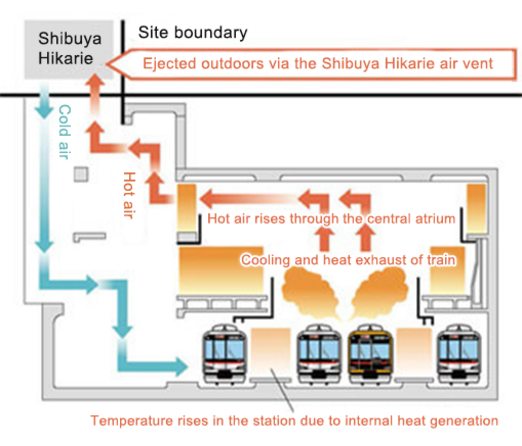
Shibuya Station's natural ventilation system
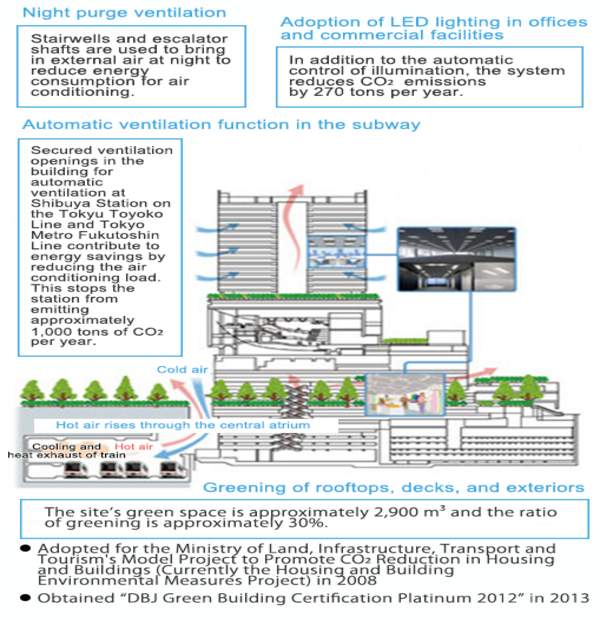
Environmental Considerations at Shibuya Hikarie
Related page (Tokyu Railways' Environmental Initiatives)(Only available in Japanese)
[Resource Utilization] Establishing a system for electricity recycling in hotels -Kawasaki King Skyfront Tokyu Rei Hotel *1-
Opened in June 2018, the Kawasaki King Skyfront Tokyu Rei Hotel is the world's first hydrogen hotel, utilizing hydrogen derived from used plastics for electricity and hot water. Its applications don't stop there; the hotel uses hydrogen energy to hydroponically cultivate lettuce in the lobby, which is then served at the buffet. Furthermore, by providing food waste as raw material for biomass power generation, the hotel achieves a 100% recycling rate. In addition, it has established a circular system where the generated electricity is bought back through a power company and used at the hotel. By introducing the 100% renewable energy plan "Zero Emission Plan®" *2 for other electricity needs, the hotel has achieved a CO2-free electricity supply, with 30% of its total power coming from hydrogen energy and 70% from renewable energy. The annual CO2 reduction is approximately 419 tons (equivalent to about 47,600 cedar trees), contributing to the realization of a decarbonized and recycling-based society.
*1 In July 2026, "Kawasaki King Skyfront Tokyu Rei Hotel" was rebranded as "The HOTEL Well-hub Haneda," an experiential hotel.
*2 An environmentally conscious power supply plan that uses FIT electricity as a power source and achieves virtually 100% renewable energy through the use of non-fossil fuel certificates and J-Credits.

Exterior of "Kawasaki King Skyfront Tokyu Rei Hotel"

Installing a pure hydrogen fuel cell system

Leaf lettuce grown at the hotel
Related page (Tokyu Hotels "Sustainable Policy")
[Resource Utilization] Reducing Plastic Cutlery - Tokyu Store -
In April 2022, the Act on Promotion of Resource Circulation Related to Plastics (Plastic Resource Circulation Promotion Act) came into effect to strengthen businesses' efforts to reduce plastic. In response to this, Tokyu Store is considering reducing the amount of plastic cutlery (spoons, forks, straws, etc.) that is distributed free of charge in stores. All stores have switched to wooden and paper cutlery, achieving a reduction of 21.1 tons of plastic per year and making a significant contribution to environmental protection. The cutlery after the material change is produced from forests that are properly managed with the aim of sustainable forest utilization and conservation, which also contributes to forest protection.
As part of advance awareness-raising activities, we carried out measures such as posting posters on our website and in stores, and received a lot of positive feedback from customers.

In-store posters


Free new cutlery
Related page (Tokyu Store SDGs)
[Zero Waste] Effective use of rolling stocks - Transfer to railway companies -
The former 7000 series, which appeared in 1962 as Japan's first all-stainless steel railcars, was transferred to railway Konan railway (Aomori Prefecture), Hokuriku Railway (Ishikawa Prefecture), and Mizuma railway (Osaka Prefecture) after being retired from Tokyu Lines in 2000, and is still in use today. Compared to recycling through dismantling railcars, this has less of an environmental impact, and it allows the railcars to be updated at low cost to the railway to which they are transferred.
Additionally, the 7700 series, which was created in 1987 by modifying the old 7000 series, was retired from Tokyu Lines in November 2018 and transferred to the Yoro Railway (Gifu Prefecture and Mie Prefecture). After being modified for the Yoro Railway, including changing the exterior design and installing cross seats in some of the middle cars of the three-car train, it completed test runs and began commercial operation in April 2019. It is scheduled to continue running on the Yoro Railway for approximately 30 years from now.

The 7700 series that ran on the Tokyu Line

7700 series train running on the Yoro Railway
Related page (Tokyu Railways' Environmental Initiatives)(Only available in Japanese)
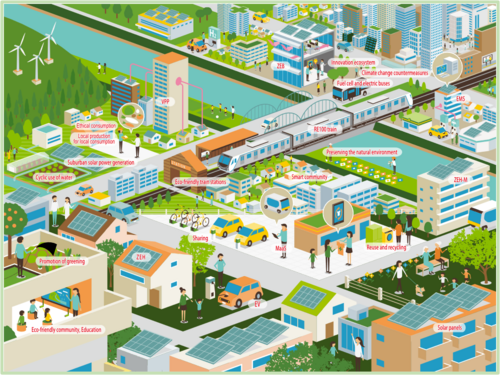
[Coexistence with Nature] Sustainable Urban and community development in harmony with abundant nature - Futako Tamagawa Rise
Futako Tamagawa Rise is a complex consisting of commercial facilities, offices, a hotel, and residential blocks. For the future of our children and the planet, we are working to create a safe and secure Urban and community development people are the main focus, while also being mindful of the environment.
Energy-saving equipment and renewable energy are being adopted in infrastructure facilities such as buildings and roads throughout the area, and efforts are being made to reduce energy consumption and CO2 emissions. Excellent transportation access is ensured via Den-en-toshi Line, Oimachi Line, and various bus lines, and a high-density, compact, multi-functional city is being developed, concentrating commercial, office, public facilities, and housing. A rooftop garden designed as an "ecomuseum" has also been placed on the roof. By planning it as a hub connecting the Tama River and the Kokubunji Cliff Line, the foundation of a biological network has been established. By striving to achieve Biodiversity the number of insects and birds visiting the area has increased, and spot-billed ducks can now be seen incubating eggs.
These efforts were recognized, and in 2015 the building became the first in the world to receive Gold certification *1 from the international environmental certification system, LEED ND (Neighborhood development category). The certification drew a wide range of attention, with a surge in visits from environmental and construction professionals from both within Japan and overseas. It also led to the building winning the 25th Global Environment Award (Grand Prix) *2, sponsored by Fujisankei Communications Group which aims to achieve "coexistence between industrial development and the global environment."
Futako Tamagawa Rise has been recognized for its efforts to maintain and preserve the Tama River ecosystem, receiving the highest AAA rating from the Japan Japan Habitat Evaluation and Certification Program (JHEP), a domestic third-party system that evaluates projects that enhance Biodiversity.
*1 LEED®, offered by the U.S. Green Building Council (USGBC), is an evaluation and certification program that contributes to the design, construction, and maintenance of high-performance green buildings. LEED® and its logo are registered trademarks of the USGBC and may be used with permission.
*2 Global Environment Award: An award system established with the aim of "coexistence between industrial development and the global environment," bringing together businesses, government, and citizens.

A sustainable city that eliminates waste of energy and resources
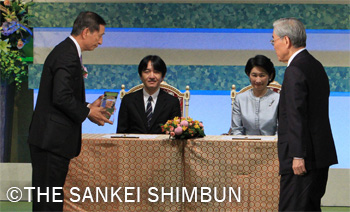
Winner of the 25th Global Environment Award
Futako Tamagawa Rise is blessed with a natural environment close to the Tama River and the Kokubunji Cliff Line.
Related page (Futako Tamagawa Rise Environmental Initiatives)