waste

waste

Recognition of issues and response policy

To achieve our waste reduction targets, we have created and published the "Environmental Policy" and "Environmental Vision 2040," to deepen our understanding of the issues at hand. Based on this awareness, the Company and its consolidated subsidiaries will manage waste responsibly in accordance with laws and regulations regarding waste disposal procedures, reduce waste emissions through appropriate resource use, and work to realize recycling-based society. In addition to explaining our targets and specific actions, we also share good examples of waste reduction efforts, such as converting waste into valuable resources and promoting reuse, to encourage thorough company-wide efforts.

Goals and Results

the Company and its consolidated subsidiaries have set the following waste reduction targets.
FY2030: 20% reduction in revenue sources
FY2035: 25% reduction in revenue sources
FY2040: 30% reduction in revenue sources

*All comparisons are from fiscal 2019

Waste generation and recycling rate

item unit FY2019
(Base year)
2021年度 2022年度 2023年度 2024年度 Year-on-year change
Total waste volume t 43,145 41,812 40,739 35,542 37,921 106.7%
  Recycling volume t 16,400 20,513 20,092 15,864 15,083 95.1%
Non recycling volume t 26,745 21,299 20,647 19,678 22,838 116.1%
Recycling rate 38.0% 49.1% 49.3% 44.6% 39.8% 89.2%
Operating revenue Billion Yen 9,965 8,791 9,313 10,378 10,549 101.6%
a revenue unit basis t/billion yen 4.33 4.76 4.37 3.42 3.59 105.0%
Reduction rate against base year 9.9% increase 0.9% increase 21.0% decrease 17.1% decrease

* Operating revenue for fiscal 2019 and FY2020 is calculated based on the estimated impact of applying accounting standards for revenue recognition.

Examples of initiatives

Initiatives to reuse and recycle rolling stock (Tokyu Railways)

Tokyu Railways is working to promote resource recycling and reduce environmental impact by reusing retired rolling stock as much as possible.
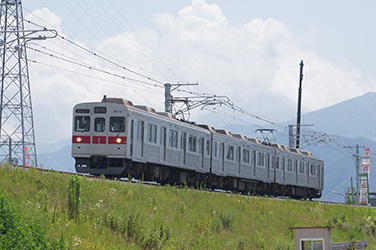
We are working to transfer retired rolling stock that can still be safely used to other railway operators. Since 2000, we have transferred over 300 rolling stock, not only domestically but also overseas to the Indonesian National Railway. Reusing rolling stock as is has a smaller environmental impact than manufacturing new rolling stock, and is an initiative that contributes to the realization of recycling-based society. For rolling stock that is difficult to transfer, we dismantle them and separate them into materials such as steel, aluminum, and glass, and recycle them as much as possible. This has reduced waste per rolling stock by approximately 90%.
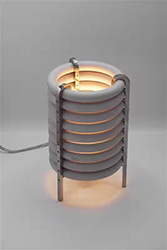
Furthermore, we are not limited to reusing used train parts; we are also working on upcycling, restoring them to a higher value. Tokyu Corporation and Tokyu Railways have produced and sold a limited run of 150 units of "WA," a lighting fixture made from straps from the 8500 series trains that operated on Den-en-toshi Line. The design, which makes use of used parts, combines the preservation of railway heritage with resource recycling. This initiative has been highly praised internationally, and was selected for the longlist (TOP 15) in the "lighting design" category of the Dezeen Awards 2025 design awards. The design was selected from 4,300 entries from 89 countries around the world, and was recognized for its ability to both solve social issues and be a good design.
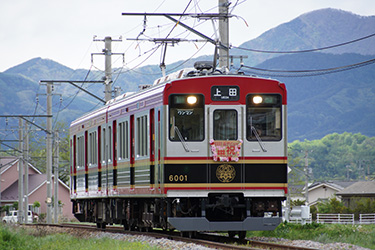

Ueda 1000 series

Nagano 8500 series

"WA" is a lighting fixture that utilizes hanging straps

Recycling of old materials (Tokyu Railways)

As part of the SOCIAL WOOD PROJECT, we are working to reuse and sell old wood from old wooden station buildings such as Ikegami Station on the Ikegami Line, in order to recycle old wood generated during renovation work at Tokyu Line stations.
In addition to holding workshops using old wood, the company utilizes the know-how of the Kozai Biyori Group, which collects, processes, and sells old wood.Old wood secured from construction work such as station improvements is processed at the Kozai Biyori Group's factory into products that retain the paint and texture of the station buildings, and is sold under the product name "Station Wood" through the Kozai Biyori Group sales site and other outlets.
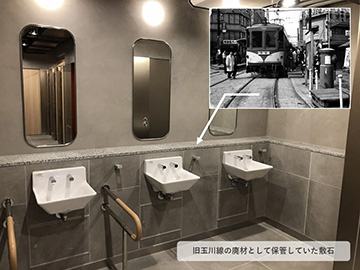
Additionally, during the renovation of Komazawa-Daigaku Station, paving stones that had been stored as waste materials from the old Tamagawa Line were used to make washbasins, thereby reducing CO₂ emissions during waste disposal.
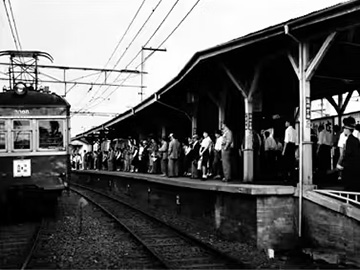

The old wooden Ikegami Station building (1959)

Tabletop made from "Station Wood"

 
【事務局】株式会社ディ・エフ・エフ, 【事務局】東急株式会社 社長室 ESG推進グループ 企画担当①, 東急株式会社 社長室 ESG推進グループ 企画担当②

resource

resource

Recognition of issues and response policy

Toward the creation of recycling-based society, the Company and its consolidated subsidiaries have created and published the "Environmental Vision Guidelines," which are internal practical guidelines based on our "Environmental Policy" and "Environmental Vision 2040," and are deepening our awareness of the issues at hand. We will contribute to the creation of recycling-based society by working to reduce raw material procurement that has a negative impact on the environment and natural capital and by recycling resources. From the design stage of our products and services, we will promote the 3Rs (reduce, reuse, recycle) and the substitution of sustainable raw materials and materials, as well as the separation, collection, and recycling of used products.

Examples of initiatives

Tokyu Hotels Green Coin System reduces amenity usage

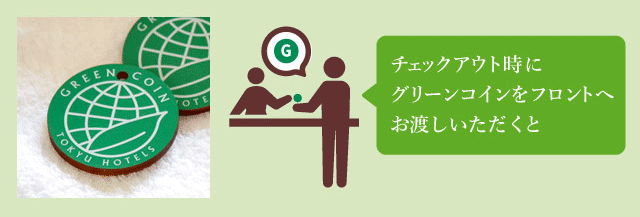
Tokyu Hotels has introduced the "Green Coin System" in consideration of protecting the global environment.
The Green Coin Scheme is a system in which if guests do not use eligible amenities during their stay, they can bring the provided Green Coins to the front desk when they check out, and the money will be donated to a fund for environmental conservation activities.
The aim is to reduce the burden on the global environment by reducing the amount of toothbrushes, razors, and other items used daily at hotels.


Tokyu Store reduces wood usage for cutlery

In April 2022, the Act on Promotion of Resource Recycling Related to Plastics (Plastic Resource Recycling Promotion Act) came into effect, strengthening businesses' efforts to reduce plastic use. In response, Tokyu Store is promoting consideration for the global environment by switching from plastic to wood and paper from April 1, 2022, and by switching to toothpick-less disposable chopsticks and discontinuing the provision of wooden forks from June 2024. The cutlery made from the new material is produced from forests that are properly managed with the aim of sustainable forest utilization and conservation, which also contributes to forest protection.

As part of advance awareness-raising activities, we posted posters on our website and in stores, and received a lot of positive feedback from customers.

In-store posters

New free cutlery New free cutlery

Free new cutlery

【事務局】株式会社ディ・エフ・エフ, 【事務局】東急株式会社 社長室 ESG推進グループ 企画担当①, 東急株式会社 社長室 ESG推進グループ 企画担当②

pollution

pollution

Recognition of issues and response policy

Toward the creation of recycling-based society, the Company and its consolidated subsidiaries have created and published the "Environmental Vision Guidelines," which are internal practical guidelines based on our "Environmental Policy" and "Environmental Vision 2040," and are deepening our awareness of the issues at hand. We recognize that the emission and disposal of pollutants during the extraction, manufacturing, and use of resources used in the Company and its consolidated subsidiaries business poses a risk to Biodiversity and human health, and we strive to prevent and mitigate the impact of environmental pollution caused by chemical substances, oil, marine plastic waste, etc., reduce emissions of air pollutants, and reduce and properly treat hazardous waste and wastewater. We fulfill our responsibility to prevent pollution by complying with laws and regulations related to environmental pollution.

Examples of initiatives

Tokyu Stores reduces freon gas emissions by switching to refrigerated cases

We are working to switch from the "CFC gas" used as a refrigerant in our refrigerated cases to environmentally friendly "CFC-free refrigerants" and "refrigerants with less greenhouse gas impact." As of fiscal 2024, we have installed CFC-free refrigerated cases at two business locations and refrigerated cases with less greenhouse gas impact at 38 stores. We will continue to introduce these in the future.

【事務局】株式会社ディ・エフ・エフ, 【事務局】東急株式会社 社長室 ESG推進グループ 企画担当①, 東急株式会社 社長室 ESG推進グループ 企画担当②

Collaborating with external parties to reduce waste and raw material use

Collaborating with external parties to reduce waste and raw material use

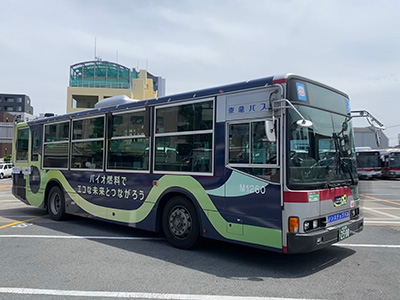
Tokyu Bus efforts to popularize biofuel blends

In September 2023, Tokyu Bus, Tokyo City University, and euglena Co., Ltd. were selected as business operators for the Tokyo Metropolitan Government's "Biofuel Utilization Commercialization Promotion Support Project." This project supports efforts by the Tokyo Metropolitan Government to commercialize vehicles, ships, aircraft, and other vehicles that use environmentally friendly biofuels (biodiesel, SAF, etc.).
Through this industry-academia collaboration, the three parties will operate 150 Tokyu Bus Bus route buses using biofuel, and will also study how "environmental user fees" should be handled, in order to consider a system for promoting public transportation with a low environmental impact. The biofuel used in this initiative is provided by Euglena Co., Ltd. and is mainly made from used cooking oil.
We will work to make our bus passengers and as many other people as possible aware of our sustainable efforts using biofuels.


Bus wrapping designed by students from Tokyo City University (Tokyu Bus vehicles)

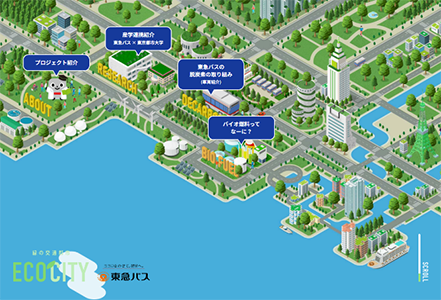
▼Click on the image to view the web page▼

Web page "Green Transportation City ECO CITY".
Widely disseminate information about biofuels and Tokyu Bus 's decarbonization efforts

Aiming for zero CO₂ emissions from the disposal of Tokyu Railways uniforms

Tokyu Railways Corporation has long recognized the issue of CO₂ emissions from the incineration of discarded uniforms. When renewing its uniforms in November 2024, the company implemented the following environmental measures with the goal of "zero incineration disposal" of 60 tons of old uniforms.
First, we are the first railway company to participate in the "ARChemia® (Aluminum Care) Project" promoted by Resonac Inc. and Itochu Corporation, and are working to dispose of approximately 59 tons of used uniforms and other items through chemical recycling, which produces hydrogen and ammonia with almost no CO₂ emissions. Furthermore, we plan to continue chemical recycling of used uniforms that are generated periodically in the future through this project. For the remaining 1 ton of unused items, we have implemented the following measures.

  • The fabric from the old work uniforms was transferred to Tokyu Bus.
  • New uniforms for children were produced using fabric from the old sales uniforms and sold to the general public.
  • Selling old shirts to employees.
  • We sell unused old shirts, ties, and belts to the general public.
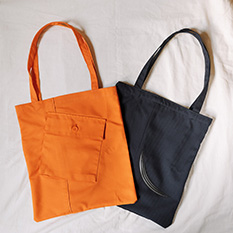
  • Tote bags were made from old uniforms and distributed to employees who requested them.
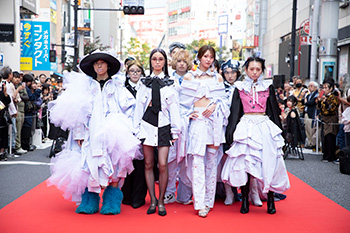
  • Participating in Shibuya Fashion Week Autumn 2024. 300 old shirts will be donated to a fashion school, and students will be able to remake their work and present it on the runway.
  • Old uniforms were processed into strips and turned into the Tokyu Line character "Norurun" and Tokyu Bus character "Notte-chan," which were then exhibited at the Train and Bus Museum.
  • Old shirt fabric was used in a customer participation workshop (making art panels).

These efforts are expected to reduce CO₂ emissions by approximately 162 tons, which would have been generated if the old uniforms had been disposed of, and have also contributed to raising environmental awareness within the company and among customers living along areas served by Tokyu’s railway lines.


©SHIBUYA FASHION WEEK
A work remade by a fashion school student
Presenting on the runway


Tote bag made from old uniforms

【事務局】株式会社ディ・エフ・エフ, 【事務局】東急株式会社 社長室 ESG推進グループ 企画担当①, 東急株式会社 社長室 ESG推進グループ 企画担当②

Participating in specific local initiatives

Participating in specific local initiatives

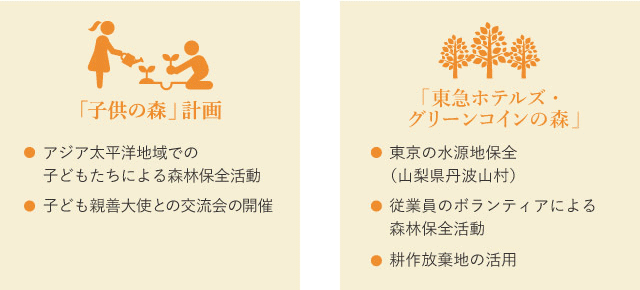
Tokyu Hotels "Tokyu Hotels Green Coin Forest"

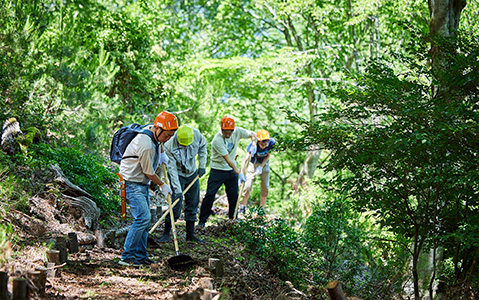
Since 2001, Tokyu Hotels has implemented the "Green Coin" environmental conservation program, in which guests donate the amount of unused amenities during their stay. This program contributes to reducing waste, and through the use of "Green Coins," we have supported reforestation activities at the "Tokyu Hotels Green Coin Forest" in Tanbayama Village, Yamanashi Prefecture, through the Public Interest Incorporated Foundation OISCA. This employee volunteer initiative, launched in 2008, aims to create a forest with high watershed conservation functions, rich in nature, and enjoyable for everyone by planting and cultivating deciduous broadleaf trees in the "Green Coin Forest." Approximately 900 employees have participated to date, and over the past 10 years, approximately 12 hectares of forest have been developed. Yamanashi Prefecture estimates that the area absorbs more than 80 tons of CO₂.


【事務局】株式会社ディ・エフ・エフ, 【事務局】東急株式会社 社長室 ESG推進グループ 企画担当①, 東急株式会社 社長室 ESG推進グループ 企画担当②